
Industry guides · 3 min read ·
IT setup checklist for logistics companies in Kerala
Running a logistics or transport operation? Branch connectivity, dispatch systems, always-on networks, and integrations — the complete IT checklist for Kerala logistics firms.
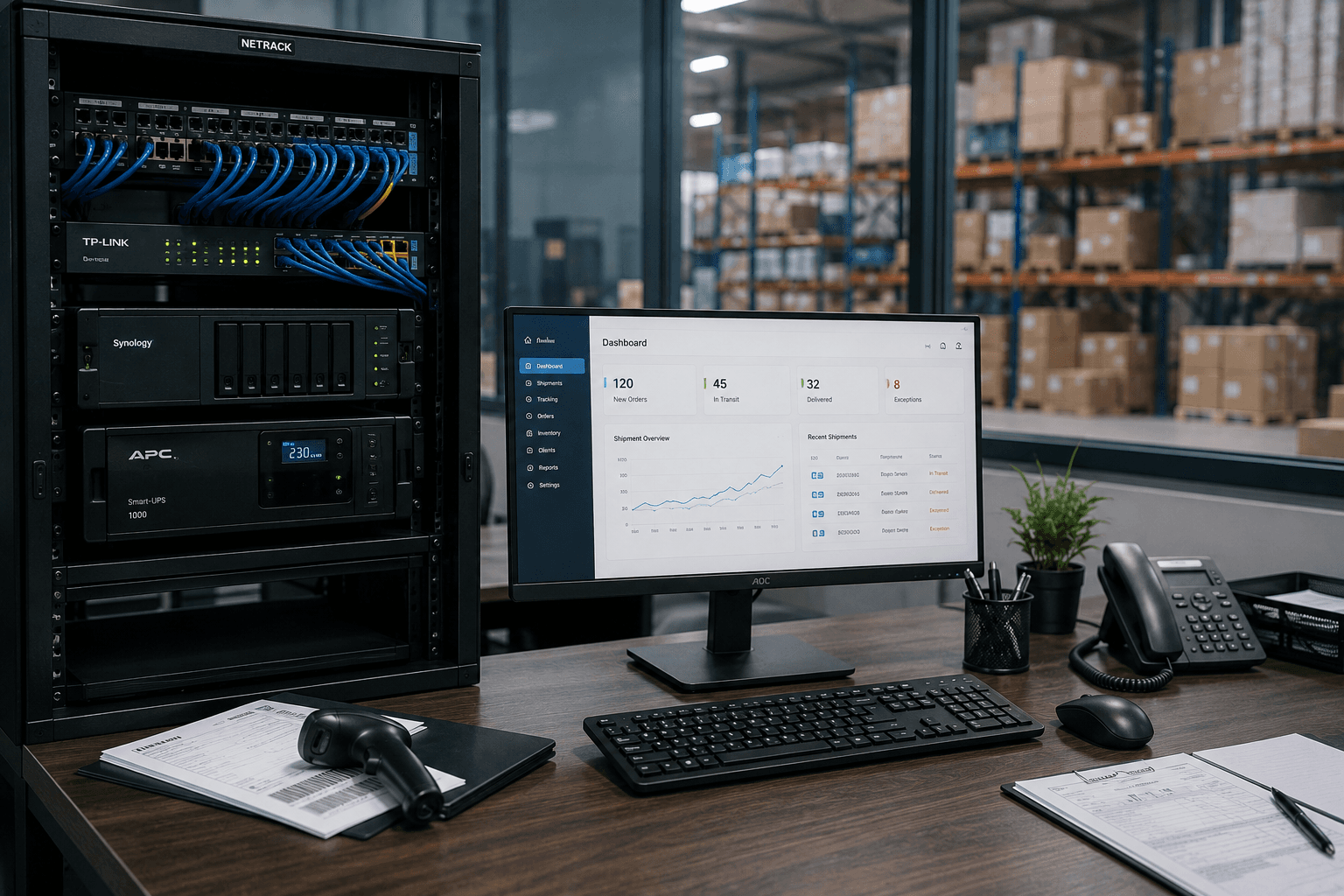
Logistics runs around the clock and across locations. Branches, warehouses, and dispatch all depend on systems that stay connected — and when one location drops off the network, work stops there and delays ripple down the chain. Here's the complete IT checklist for a logistics or transport operation in Kerala.
Step 1 — Map your locations and flows
Logistics IT is defined by geography. Before anything else, map every location — head office, branches, warehouses — and how information flows between them: where bookings come in, where dispatch happens, where accounting lives. This determines the connectivity and systems you need, and it's the step that's easiest to skip and most expensive to get wrong.
Step 2 — Branch and warehouse hardware
Each location needs dependable workstations for booking, dispatch, and tracking, plus printers for documentation and a solid local network. Warehouses may need rugged hardware suited to the environment. Standardising across locations makes support far simpler. We supply and set up hardware for every branch with GST invoicing.
Step 3 — Reliable branch connectivity
This is the heart of logistics IT. Every location has to stay connected during operating hours, because a branch that goes dark stops dispatching. That means:
- A primary internet connection at each site, with backup/failover so one line dropping doesn't halt work.
- Point-to-point wireless links between nearby sites where running a line isn't practical.
- Secure connections between branches and head office.
Reliable, redundant connectivity is what keeps the operation moving. See our networking page for how we design this.
Step 4 — Dispatch and accounting systems
Logistics runs on its operational software — dispatch, tracking, and accounting. We license and set up the tools your operation needs as part of our software services, configured so the workflow matches how you actually dispatch and bill.
Step 5 — Integrations that cut manual work
The biggest hidden cost in logistics IT is re-entering the same information at every stage — booking, dispatch, tracking, invoicing — in separate systems. We connect those tools so data flows automatically instead of being keyed in again and again. Fewer handoffs mean fewer delays and fewer errors. This is our automation work.
Step 6 — Always-on support
A failure at one point delays everything after it, so uptime is everything. An AMC scoped to your operating hours — including cover beyond a nine-to-five where your operation needs it — keeps hardware and networks maintained with priority response, so problems get handled before they cascade.
Rough budget for a Kerala logistics operation
| Item | Typical range |
|---|---|
| Branch hardware (per location) | ₹60,000–2,00,000 |
| Connectivity + failover (per site) | ₹20,000–1,00,000 |
| Point-to-point links (per link) | ₹30,000–1,20,000 |
| Dispatch/accounting software setup | ₹30,000–1,50,000 |
| AMC (annual) | ₹60,000–3,00,000/year |
Indicative figures — final numbers depend on the number of locations and how much integration you need. We quote fixed prices after mapping your operation.
The pattern
Every step serves one goal: no location goes dark, information flows without manual re-keying, and problems get handled before they ripple down the chain. In logistics, that reliability is the whole game.
See how we support IT for logistics companies, or WhatsApp us your locations and systems and we'll map out a plan.
Frequently asked
Common questions on this topic.
Keep reading
More from the ITSolute blog.
IT setup checklist for retail shops & restaurants in Kerala
Opening a shop or restaurant? POS and billing, reliable networks, CCTV, and multi-branch reporting — the complete IT checklist built for Kerala retail and food businesses.

IT setup checklist for real estate offices in Kerala
Opening or scaling a real estate office? Branch hardware, a CRM that fits how you sell, WhatsApp lead capture, and multi-branch systems — the complete IT checklist for Kerala real estate firms.
IT setup checklist for schools & colleges in Kerala
Setting up or upgrading a school's IT? Computer labs, staff systems, safe campus WiFi, and budgets — the complete checklist for Kerala schools and colleges.