
Managed IT & AMC · 4 min read ·
Managed IT vs break-fix support: which costs less long-term?
Pay only when something breaks, or a fixed monthly fee to keep it from breaking? The honest cost comparison of break-fix vs managed IT for a growing business.
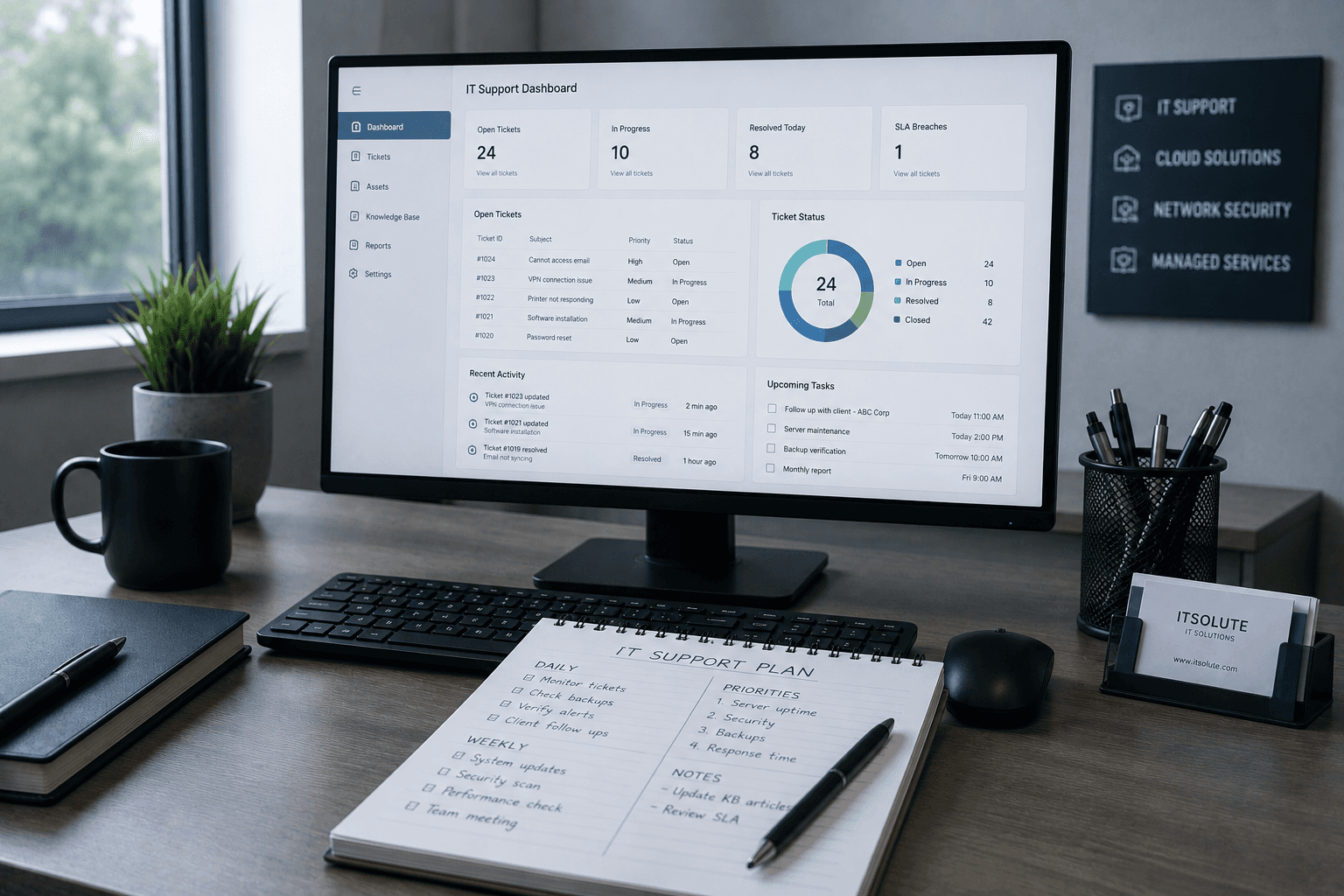
Every growing business eventually faces the same choice about IT support: pay someone only when something breaks, or pay a fixed fee to keep things from breaking in the first place. The first is called break-fix; the second, managed IT — usually delivered as an annual maintenance contract. The instinct is that break-fix must be cheaper because you "only pay when you need it." Over a year, that instinct is usually wrong. Here's the honest comparison.
What break-fix actually is
Break-fix is reactive support. A machine dies, the network drops, Tally corrupts — you call around, find someone available, and pay them per visit or per job. There's no ongoing relationship and no prevention. You pay nothing when things work, and a premium when they don't.
For a very small setup — one or two machines, nothing critical — this is genuinely fine.
What managed IT actually is
Managed IT is proactive. For a fixed regular fee, a provider maintains your systems, monitors them, applies preventive servicing, keeps your backups running, and responds with priority when something fails. The goal isn't to fix problems faster — it's to have fewer of them. This is what an IT AMC delivers.
The hidden costs of break-fix
Break-fix looks cheap because you only see the invoices. The costs you don't see on paper are the ones that add up:
- Premium rates. One-off, no-relationship jobs are billed at a premium. The regular-client discount doesn't apply.
- Downtime while you find help. When something critical breaks, you're not just paying for the fix — you're losing working hours while you find someone free to do it.
- Preventable failures. Most serious failures give warning signs. Break-fix catches nothing early because nobody's watching. A drive that could have been swapped during a quiet afternoon instead dies mid-morning with a full workload on it.
- No accountability. When different people touch your systems each time, nobody owns the overall picture, and problems recur.
Add these up over a year and break-fix frequently costs more than a maintenance contract — you just pay it in downtime and premium call-outs instead of a predictable line item.
The real comparison
Think of it in total cost of ownership over a year, not per incident:
| Break-fix | Managed IT (AMC) | |
|---|---|---|
| Cost pattern | Unpredictable spikes | Fixed, predictable |
| Rates | Premium per job | Included / discounted |
| Prevention | None | Built in |
| Downtime | Longer (find help first) | Shorter (priority response) |
| Accountability | Fragmented | One partner |
For a business with more than four or five machines, the managed model almost always wins on total cost once downtime is honestly counted — and it wins even more on stress.
So when is break-fix still right?
It's not always wrong. If you're a one- or two-person operation, nothing you run is critical, and a day of downtime is a shrug rather than a cost, break-fix keeps your fixed costs at zero and that's reasonable. The moment IT downtime starts costing you real money, the maths flips.
If you're weighing this up, our guide on the signs your business needs an IT AMC helps you judge which side of the line you're on, and the computer AMC cost guide breaks down what managed support actually costs in Kerala.
The bottom line
Break-fix feels cheaper because the costs are hidden in downtime and premium call-outs. Managed IT makes the cost visible, predictable, and lower for most businesses past the smallest size — because preventing problems is cheaper than reacting to them.
See what an IT AMC covers, or WhatsApp us how many machines you run and we'll tell you honestly which model makes sense for you.
Frequently asked
Common questions on this topic.
Keep reading
More from the ITSolute blog.

How to choose an IT support company in Kottayam
A practical guide to picking an IT support partner in Kottayam — what to look for, the red flags to avoid, and the questions that separate a real partner from a phone number that doesn't answer.
Why local IT support beats remote-only outsourcing
Remote IT support is fast and cheap — until someone needs to physically touch a machine, a cable, or a router. Why a local partner still wins for businesses with real premises.

7 signs your business needs an IT AMC
Not every business needs an IT maintenance contract — but if these signs sound familiar, you're already paying for the lack of one in downtime and stress.