
Security & surveillance · 4 min read ·
IP vs analog CCTV: which is right for you?
IP and analog CCTV both have a place in 2026. The honest breakdown of image quality, cost, cabling, and scalability — so you buy the right mix instead of overpaying or under-covering.
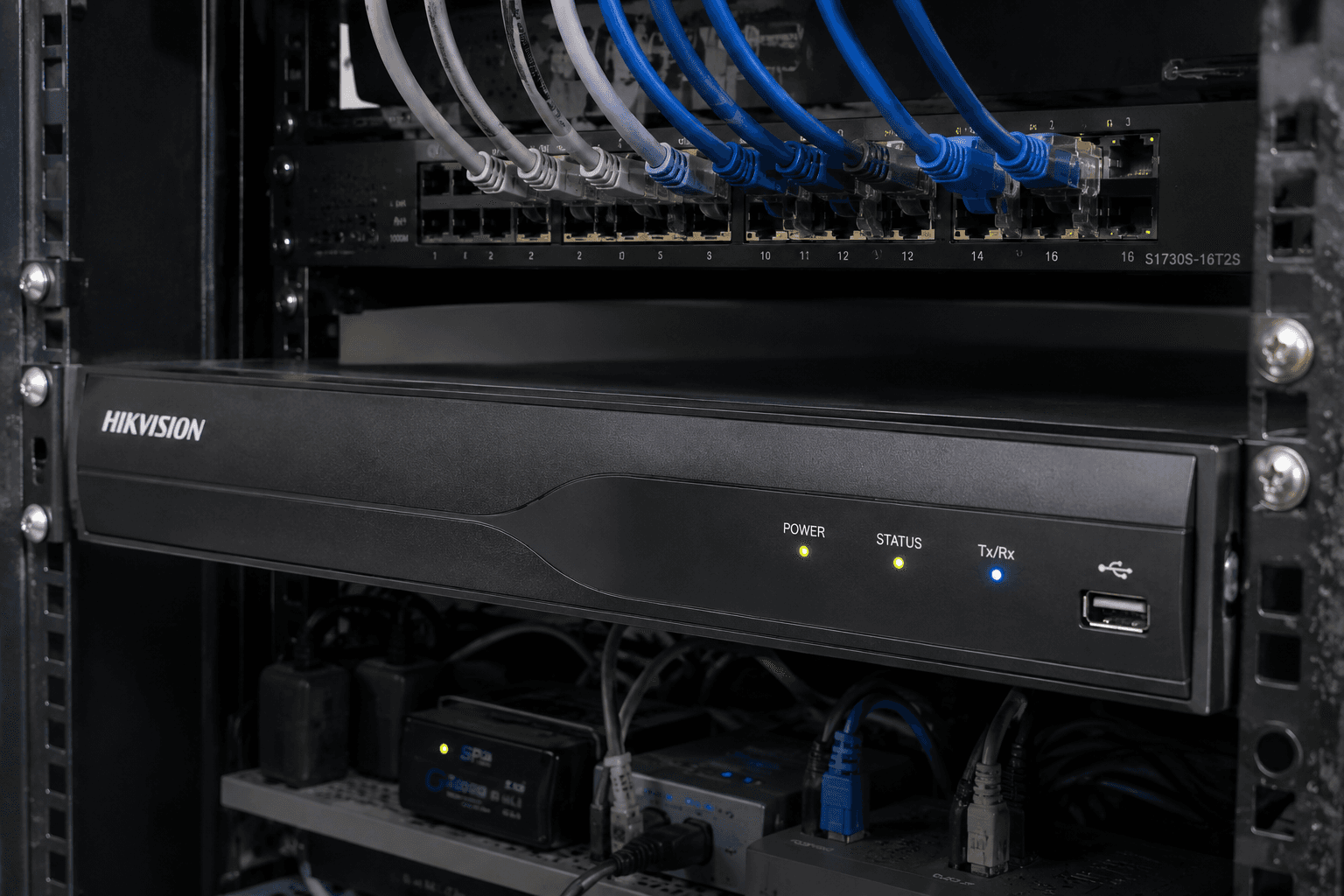
If you're buying CCTV in 2026, you'll be choosing between IP and analog cameras — and most vendors will push you toward whichever they stock. The honest answer is that both have a place, and the right system for many homes and businesses uses a mix of the two. Here's how to decide.
What the two actually are
Analog CCTV is the traditional approach, modernised. Today's HD analog cameras (marketed as AHD, HD-TVI, or HD-CVI) deliver genuinely good image quality — a long way from the grainy footage analog used to mean. They connect over coaxial cable to a DVR.
IP CCTV uses network cameras that connect over Ethernet cabling to an NVR, usually powered over the same cable (PoE). Each camera is effectively a small networked device, which is what enables higher resolution and smarter features.
Image quality
IP wins here, clearly. IP cameras go to much higher resolutions, so you can zoom into recorded footage and still make out a face or a number plate. Modern HD analog is good — fine for seeing what happened and roughly who — but if you need to identify someone from the footage, IP is the safer choice.
Verdict: IP for detail; analog is fine for general coverage.
Cost
Analog wins on price. The cameras are cheaper, the recorders are cheaper, and if you already have coaxial cabling from an older system, you can often reuse it. IP costs more per camera and needs network cabling and PoE switches.
Verdict: analog for budget; IP for capability.
Cabling and installation
Analog uses coaxial cable to a DVR. IP uses Ethernet with PoE, so a single cable carries power and data to each camera — neater for new installs, but different from what an old analog system used. If you're upgrading, the cabling change is a real part of the cost.
Verdict: for a fresh install, IP cabling is cleaner; for reusing old cabling, analog is simpler.
Scalability and features
IP systems scale better and support smarter features — defined motion zones, line-crossing alerts, better search through recorded footage. For a small fixed number of cameras, analog is perfectly adequate. For a system you expect to grow, or one where you want intelligent alerts, IP is built for it.
Verdict: IP for growth and smart features; analog for small, fixed setups.
When analog makes sense
- A shop or small office wanting solid general coverage on a budget.
- Replacing a few cameras on an existing analog system with usable cabling.
- Situations where you need to see events, not identify individuals in fine detail.
When IP makes sense
- Entrances, tills, and gates where you must be able to identify people or vehicles.
- Larger premises with many cameras.
- Anyone wanting smart motion alerts and easy footage search.
- New installs where you're running fresh cabling anyway.
The answer for most businesses: a mix
You rarely need every camera to be top-spec IP. The cost-effective approach is IP cameras where detail matters — the front door, the counter, the gate — and HD analog for general coverage of corridors, stockrooms, and open areas. A hybrid setup gets you identification-grade footage where it counts without paying IP prices for every angle.
One thing that's non-negotiable either way: IP cameras belong on their own isolated network segment so they don't slow down your business systems. That's a networking decision as much as a security one — and a reason to have CCTV installed by a team that understands both.
If you want help choosing the right mix for your premises, see our CCTV installation service or WhatsApp us your layout and we'll recommend what makes sense — after a free site survey, not a sales pitch.
Frequently asked
Common questions on this topic.
Keep reading
More from the ITSolute blog.
CCTV AMC: what's actually covered (and why it matters)
CCTV cameras fail quietly — you only find out when the footage you needed was never recorded. What a CCTV maintenance contract covers, and why 'install and forget' is a risk.
CCTV camera price guide for Kerala homes & businesses (2026)
What CCTV actually costs to install in Kerala — for homes and businesses — camera types, recorder and storage costs, installation, and realistic package prices for 4, 8, and 16 cameras.
IT setup checklist for logistics companies in Kerala
Running a logistics or transport operation? Branch connectivity, dispatch systems, always-on networks, and integrations — the complete IT checklist for Kerala logistics firms.