
Entrance automation · 6 min read ·
Automatic gates for NRI homes: control your gate from abroad
A house in Kerala that stands empty for months has a different problem from one that's lived in. How app control, battery backup and a local maintenance contract let you open your gate — and trust it — from another country.
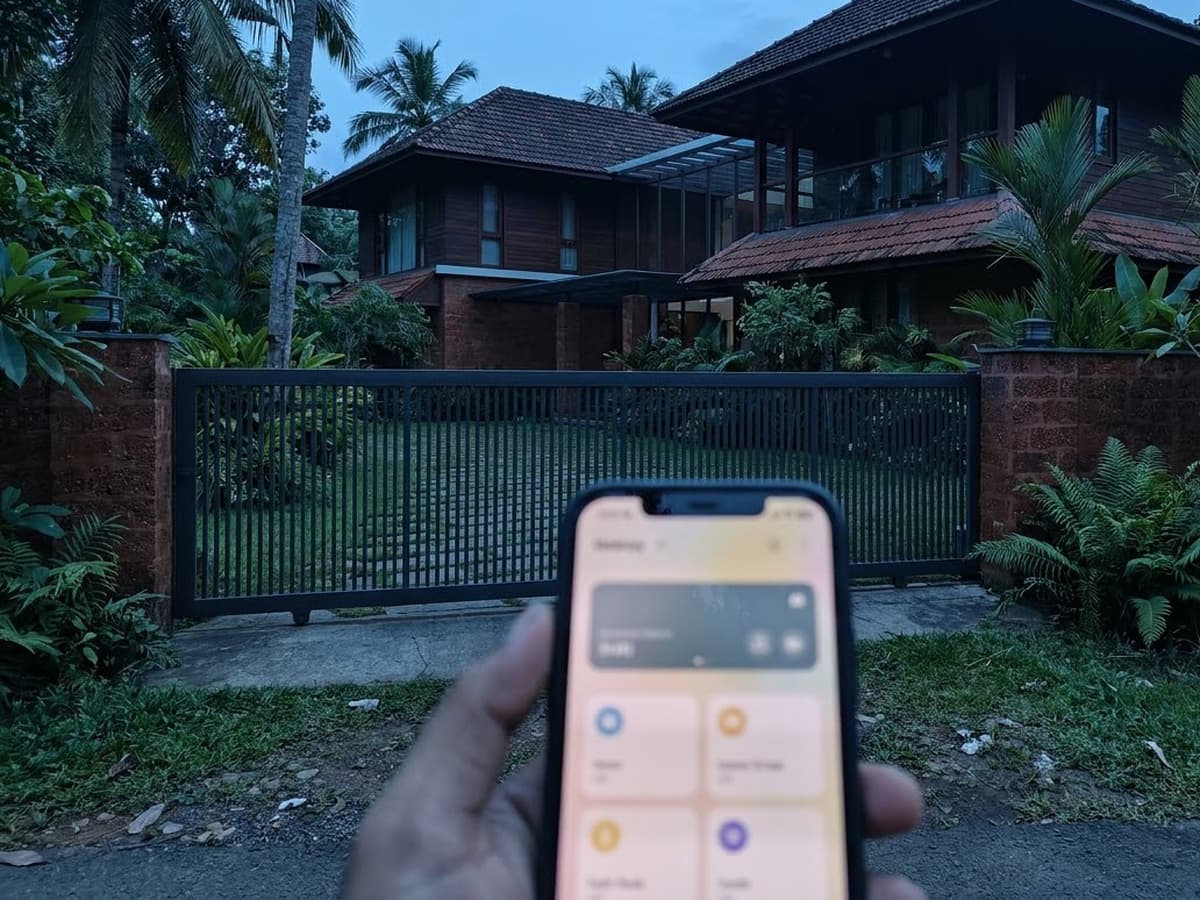
A house in Kerala that's lived in and a house that stands empty for ten months are not the same property, and they don't need the same gate.
If you're abroad, the gate has to do something extra. It has to let people in while you're not there, and it has to still work when you arrive — after a monsoon you didn't see and a year of nobody noticing anything.
Those are two different problems. Both are solvable, and they're solved by different things.
Problem one: letting people in while you're away
Houses that stand empty still have visitors. A caretaker. A gardener. A relative checking on the place. A plumber. A delivery. Somebody has to get through the gate, and you're not there to open it.
There are two layers worth getting right, and the common mistake is using only one.
Give the regulars their own credential. Anyone who comes routinely — caretaker, gardener, family — should have one. Two remotes come with the motor kit and extras are available. For a house you're not at, an RFID tag is often the better choice: it's issued per person and revoked individually, so when a caretaker changes you cancel that tag without recalling anything. Tags are an add-on, quoted after the survey. RFID vs remote vs voice sets out the trade-off.
Keep app control for the exceptions. Voice and app control come from a WiFi smart-switch module added to the control side. It works with most standard gate motors that have a remote-control input, and it's brand-agnostic — it doesn't tie you to a particular motor. From a phone, anywhere, you can trigger the gate.
That's genuinely useful for the unplanned visitor: a delivery arrives, you open it, and nothing is left behind afterwards. No tag issued, no code shared, nothing to withdraw later.
What app control shouldn't be is the only way in. It depends on the house having power, a working internet connection, and a cloud service being up. The people who need the gate every week should not be waiting on your phone — and shouldn't be stuck when the connection is down.
Problem two: the gate still working when you arrive
This is the part that gets underestimated, because the failures are quiet.
An empty house is harder on hardware than an occupied one — not because anything works harder, but because nobody notices the small things. In an occupied house someone hears the gate start labouring, sees the track filling with silt, notices it stopping halfway. In an empty house, all of that happens unobserved until the day somebody needs the gate.
Three things in particular fail without announcing themselves:
The backup battery. It's a consumable. It declines gradually, giving fewer openings per outage, and nothing on the gate tells you. In Kerala's heat it ages faster than the datasheet suggests. The first symptom is usually a dead gate during a power cut — see gates and power cuts.
The safety sensors. Photocells drift out of alignment from a knock or a loosened mount, and their lenses collect dust, cobwebs and monsoon grime. A misaligned pair either refuses to close the gate or, worse, reads clear when it isn't.
The track or the hinges. A monsoon's worth of silt in a sliding track, or standing water at a swing gate's hinges, and the gate starts fighting the motor. Left alone it goes from stiff to seized.
None of these need an emergency. They need somebody to look.
The thing that actually makes this work
Hardware is the easy half. The half that decides whether your gate works in year five is having someone local responsible for it.
For an occupied house, an AMC is a convenience. For a house that stands empty, it's the mechanism by which anything gets noticed at all. Scheduled visits check exactly the items above — battery load-tested rather than glanced at, photocells aligned and cleaned, track cleared, hinges greased, force limits re-checked against the gate's current condition. Twice a year suits most homes, ideally once before the monsoon and once after. What gate maintenance actually involves goes through the full list.
Two practical points that are easy to arrange and easy to forget:
- Somebody on the ground must know the manual release — where it is, how it works, and where the key lives. The key must not be inside the gate it opens. If your caretaker can't open the gate by hand in an outage, nobody can.
- Keep a written record of who holds which tag. The controller stores tag numbers, not names. Without a list, cancelling the right one when a caretaker changes is guesswork.
What we'd suggest for an NRI home
- A photocell safety sensor pair and 2 remotes with every motor kit, and a DC motor so battery backup is possible
- RFID tags for the caretaker and anyone who comes regularly, revocable one at a time
- A WiFi smart-switch module for app control, as the layer for one-off visitors rather than the primary method
- A written register of who holds which tag or remote, kept by you and by whoever manages the house
- An AMC, scheduled around the monsoon, so the silent failures are found on a visit
- A named local contact who knows the manual release
And the honest caveat: app control is the feature people ask about first and the one that matters least. It's pleasant. What keeps an empty house's gate working is the battery, the sensors and somebody checking them.
A note on Pathanamthitta and the surrounding districts
A large share of the homes we survey for exactly this — automated, well specified, and empty for most of the year — are in Pathanamthitta and the areas around it. The pattern is consistent: a house built or maintained for a family abroad, used for a few weeks a year, and otherwise looked after by a caretaker who needs reliable access without being handed the keys to everything.
If that's your situation, our entrance automation in Pathanamthitta page covers the towns we cover and how we handle homes that are unattended for long stretches.
The bottom line
Give the people who come regularly their own revocable tag, keep app control for the unexpected visitor, and don't let either substitute for a DC motor with battery backup and a maintenance schedule. The gate you can open from abroad is a nice feature. The gate that still opens when you land is the one worth paying for.
See our automatic gate installation service, or WhatsApp us — we can survey the property and deal with a family member or caretaker locally while keeping you in the loop. We cover Kottayam, Ernakulam, Pathanamthitta and Alappuzha.
Frequently asked
Common questions on this topic.
Keep reading
More from the ITSolute blog.
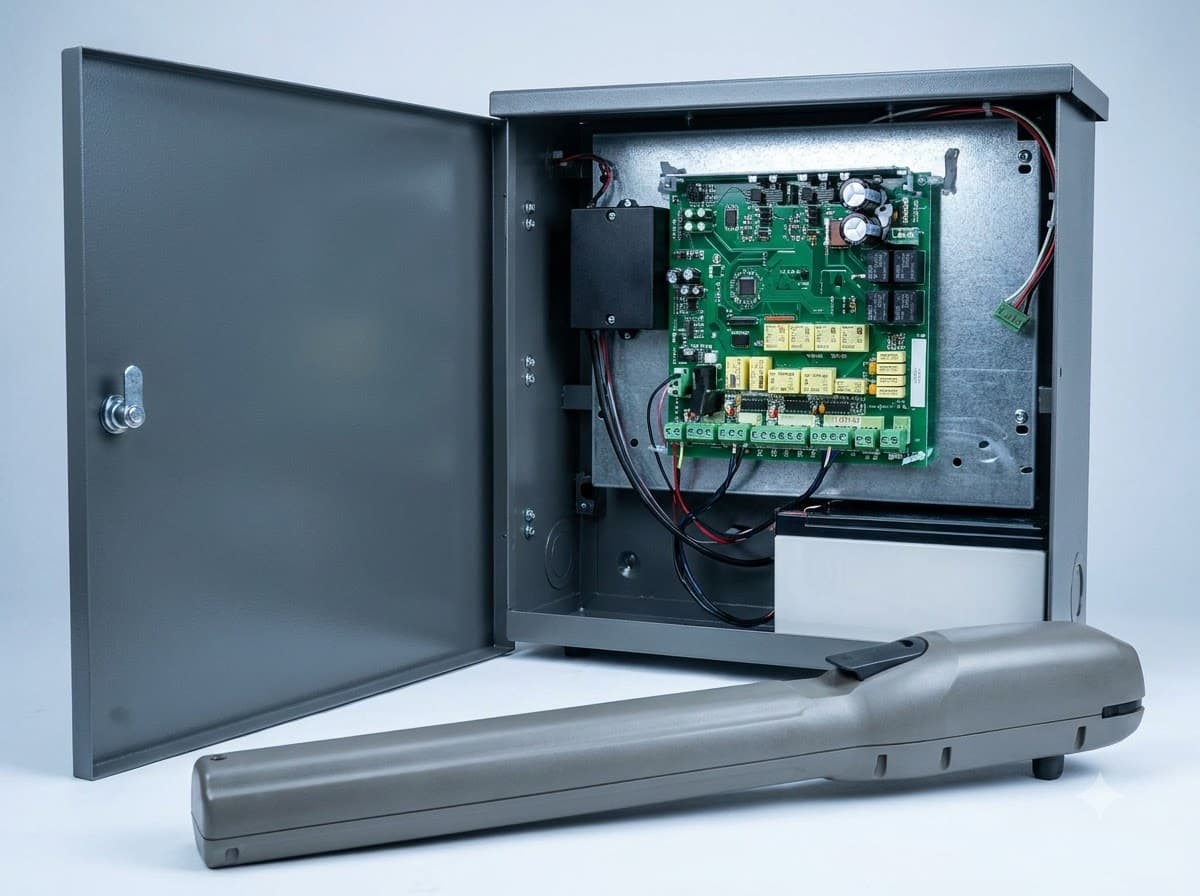
Automatic gates and power cuts: AC, DC and battery backup
A DC motor rides out a power cut on two 12V batteries. An AC motor has no battery of its own but runs from your home inverter connection. Here's the difference, what backup costs, and why the manual release key matters on every gate.
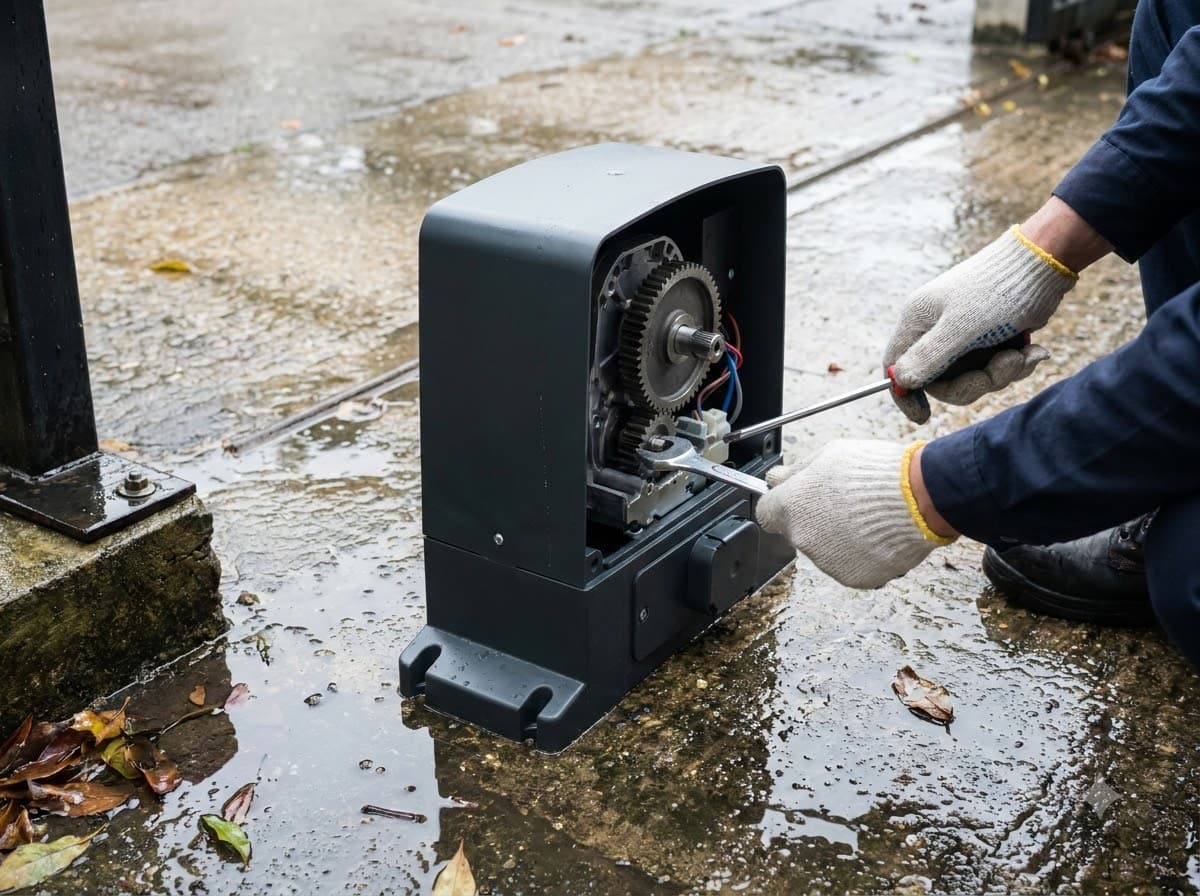
Automatic gate maintenance in Kerala: monsoon, salt air & AMC
Kerala is hard on gate automation — monsoon silt, standing water and coastal salt air all shorten its life. What maintenance actually involves, what you can do yourself, and what an AMC covers.
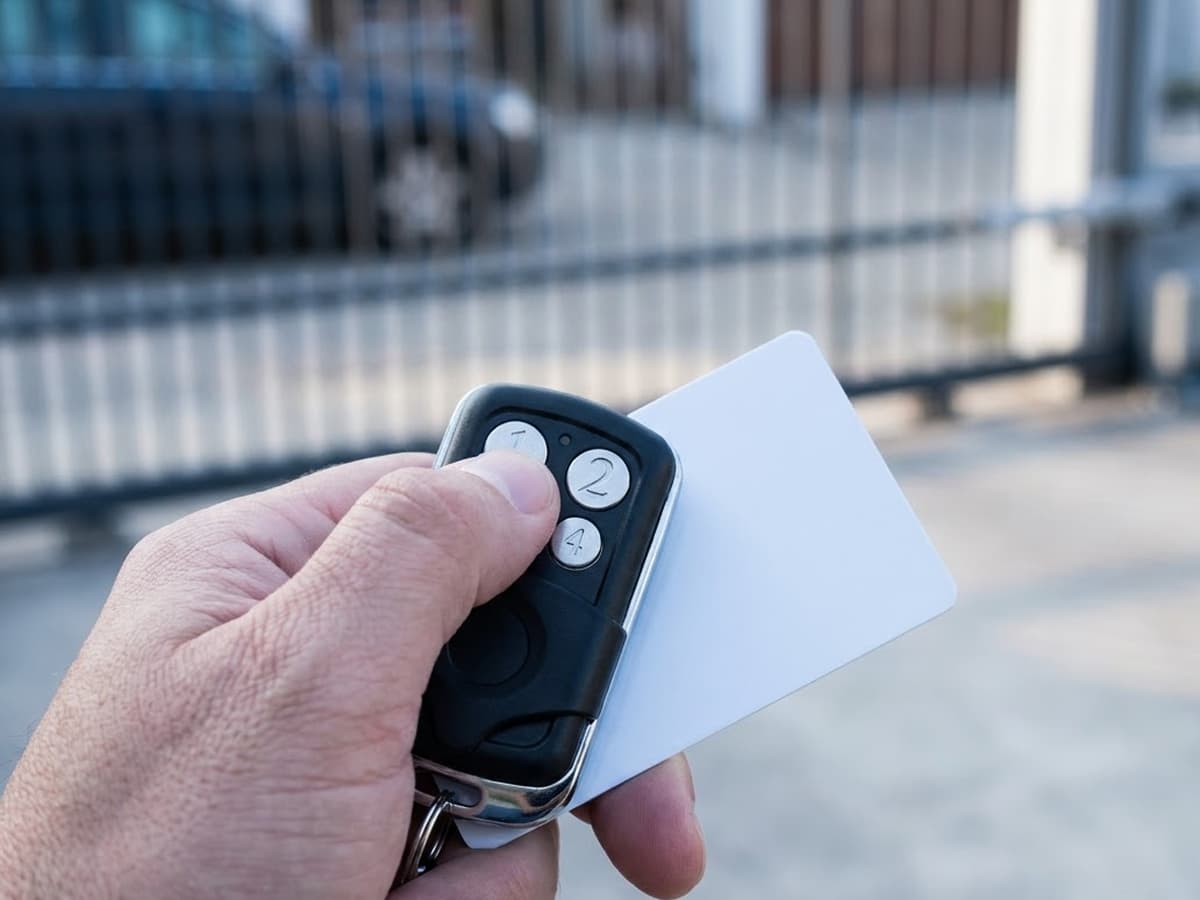
RFID vs remote vs voice: gate access options explained
Two remotes come with every gate. RFID tags are an add-on, voice control needs a DC motor, and every motor has a manual release key. Here's what each one is good for, and which matters on a home versus a block of flats.