
Entrance automation · 6 min read ·
Automatic gate maintenance in Kerala: monsoon, salt air & AMC
Kerala is hard on gate automation — monsoon silt, standing water and coastal salt air all shorten its life. What maintenance actually involves, what you can do yourself, and what an AMC covers.
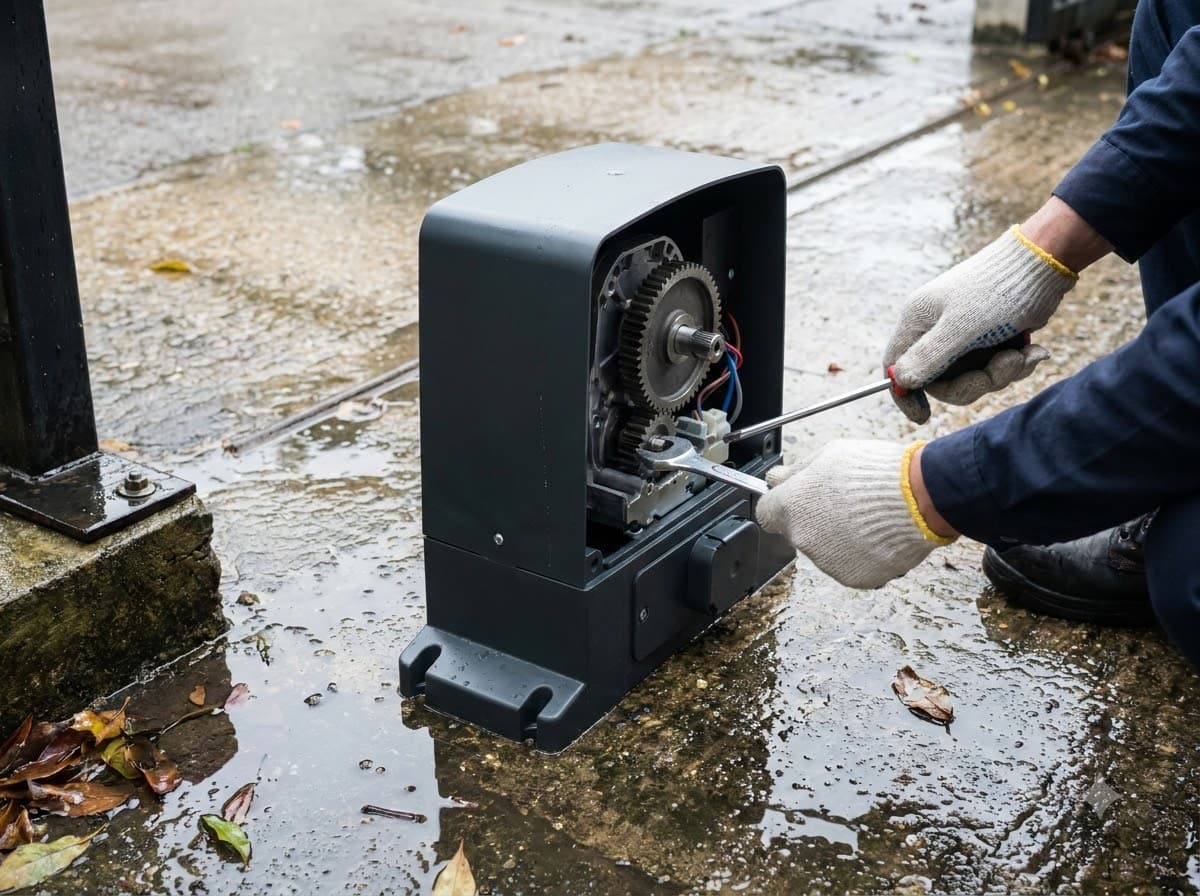
Gate automation fails in Kerala for reasons that have little to do with the motor. Silt, standing water and salt air do the damage — slowly, invisibly, and then all at once during the first heavy week of the monsoon.
None of it is dramatic. All of it is preventable.
What Kerala does to a gate
The monsoon fills the track. A sliding gate's channel collects silt, sand and leaf litter at exactly the rate the rain delivers it. The rollers start to labour. The motor compensates until it can't, and then either the force limit trips or something wears through. The gate that "suddenly failed in July" was being worn out from May.
Standing water attacks the pivot points. Swing gate hinges and post bases sit in water that doesn't drain. The wet-dry cycling does the rest. A seized hinge fights the motor exactly the way a silted track does.
Water finds cable entries. Conduit ends, glands and the motor enclosure itself. Water ingress into a control board is one of the few failures that's genuinely expensive rather than merely annoying.
Salt air corrodes everything, faster. Near the coast — Alappuzha and the backwater belt especially — fixings, track hardware and hinge pins degrade visibly quicker. A gate that looks fine from six feet away can be much worse at the welds and the bolts.
Heat ages the battery. The backup battery lives in an enclosure in the sun. Heat shortens battery life, and nothing on the gate will tell you it's fading.
The three things that actually fail
Strip away the detail and gate automation fails in three places:
- The mechanics the motor drives — track, rollers, hinges, frame. Nearly all "motor problems" start here.
- The backup battery — a consumable, declining silently.
- The photocells — drifting out of alignment or going dirty.
A maintenance visit that covers those three has covered most of what will ever go wrong. If you're troubleshooting a gate right now, this is the diagnostic order to work through.
What you can do yourself
Genuinely useful, takes minutes:
- Keep the track clear. Sweep or hose the channel. This is the single highest-value thing an owner can do for a sliding gate, and it needs doing more often during the monsoon than outside it.
- Wipe the photocell lenses. Dust, cobwebs, monsoon grime. A blocked lens is a sensor that isn't sensing.
- Run a full cycle once a month and pay attention. Watch the whole travel. Listen. You're looking for a point where it catches, labours, or sounds different from last month. You know what normal sounds like better than anyone.
- Check the gate still reverses. Break the photocell beam with something harmless while the gate is closing — a broom handle, not a foot — and confirm it stops and reverses.
And one thing not to do: don't raise the force limit to stop the gate tripping. A gate that trips is reporting a fault. Turning up the force makes it push through the fault, and through anything else in the way — which defeats the safety system entirely. Gate safety explains why this matters more than it sounds.
What a service visit covers
So you know what you're buying:
| Area | Checked |
|---|---|
| Track / hinges | Cleared, levelled, greased; rollers and pivots inspected |
| Gate movement | Full travel by hand, feeling for binding before any electrical check |
| Photocells | Alignment, lens condition, reverse test |
| Force limit | Re-set against the gate's actual current condition |
| Battery backup | Load-tested, not just observed to be present |
| Cable entries | Glands, conduit ends and enclosure seals for water ingress |
| Fixings | Corrosion inspection, particularly on coastal sites |
| Access | Remotes and any RFID tags tested; tag list reviewed where shared; manual release key confirmed |
| Manual release | Confirmed working, and the keyholder knows where it is |
The battery load test is the item worth paying for. A battery that reads fine at rest can still fail under load, and that's the one nothing else reveals until an outage.
How often
| Site | Interval |
|---|---|
| Residential, normal use | Twice a year — before and after the monsoon |
| Residential, coastal | Twice a year minimum, with a corrosion check each time |
| Apartment / shared entrance | Quarterly — wear tracks cycles, not months |
| Commercial / high traffic | Quarterly or more, by cycle count |
The timing matters as much as the frequency. A pre-monsoon visit catches the drainage and the cable seals before they're tested. A post-monsoon visit catches what the rain did.
For shared entrances there's a further argument: a gate serving thirty flats racks up a residential year's worth of cycles in a month. Apartment gate automation covers how that changes the specification as well as the service interval.
The honest case for an AMC
We offer AMC on entrance automation, and the argument for it is narrower and more specific than "peace of mind":
The battery and the sensors fail invisibly. Everything else gives you warning — a noise, a stiffness, a gate that stops. The backup battery and the photocell alignment do not. You find out about the battery during a power cut, and about the sensors when something is in the way. Those are the two worst possible moments.
High-use and coastal gates wear faster than anyone's intuition. If the gate opens two hundred times a day, or lives in salt air, scheduled maintenance isn't insurance — it's the only reason it reaches year five.
For a low-use residential gate in an inland town, doing the owner-level maintenance above conscientiously and calling someone annually is a reasonable alternative. We'd rather say that than oversell the contract.
The bottom line
Clear the track, wipe the lenses, run a monthly cycle and listen. Get the battery and the sensors checked by someone on a schedule, because those two won't warn you. Shorten the intervals if you're near the coast or the gate is shared. And never dial out a fault with the force limit.
See our entrance automation service for how AMC works alongside installation, or WhatsApp us and tell us how old your gate is and roughly how often it's used — that's enough for us to suggest a sensible interval. We cover Kottayam, Ernakulam, Pathanamthitta and Alappuzha.
Frequently asked
Common questions on this topic.
Keep reading
More from the ITSolute blog.
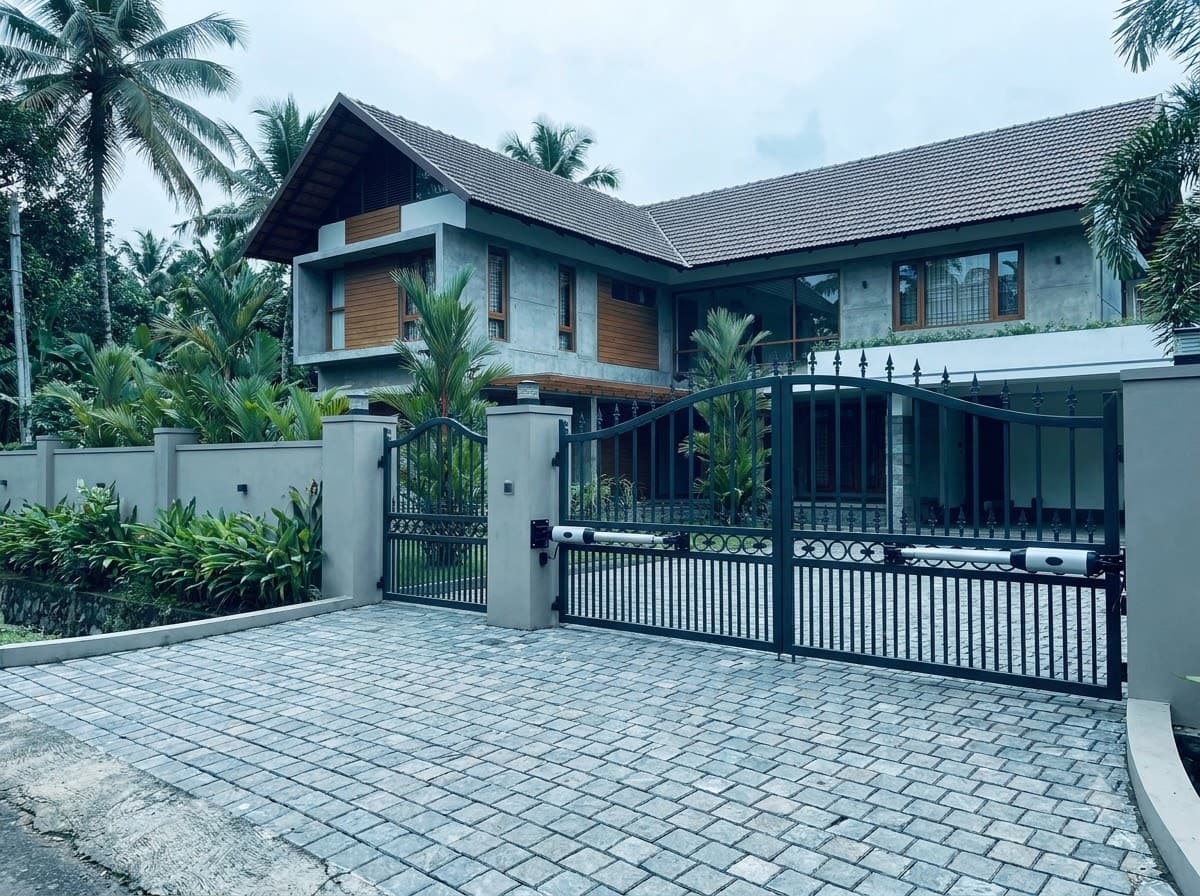
Sliding vs swing gates in Kerala: which should you automate?
The choice comes down to the space you have, your slope, and how your driveway meets the road — not preference. A practical comparison for Kerala homes, with costs and the monsoon factor.
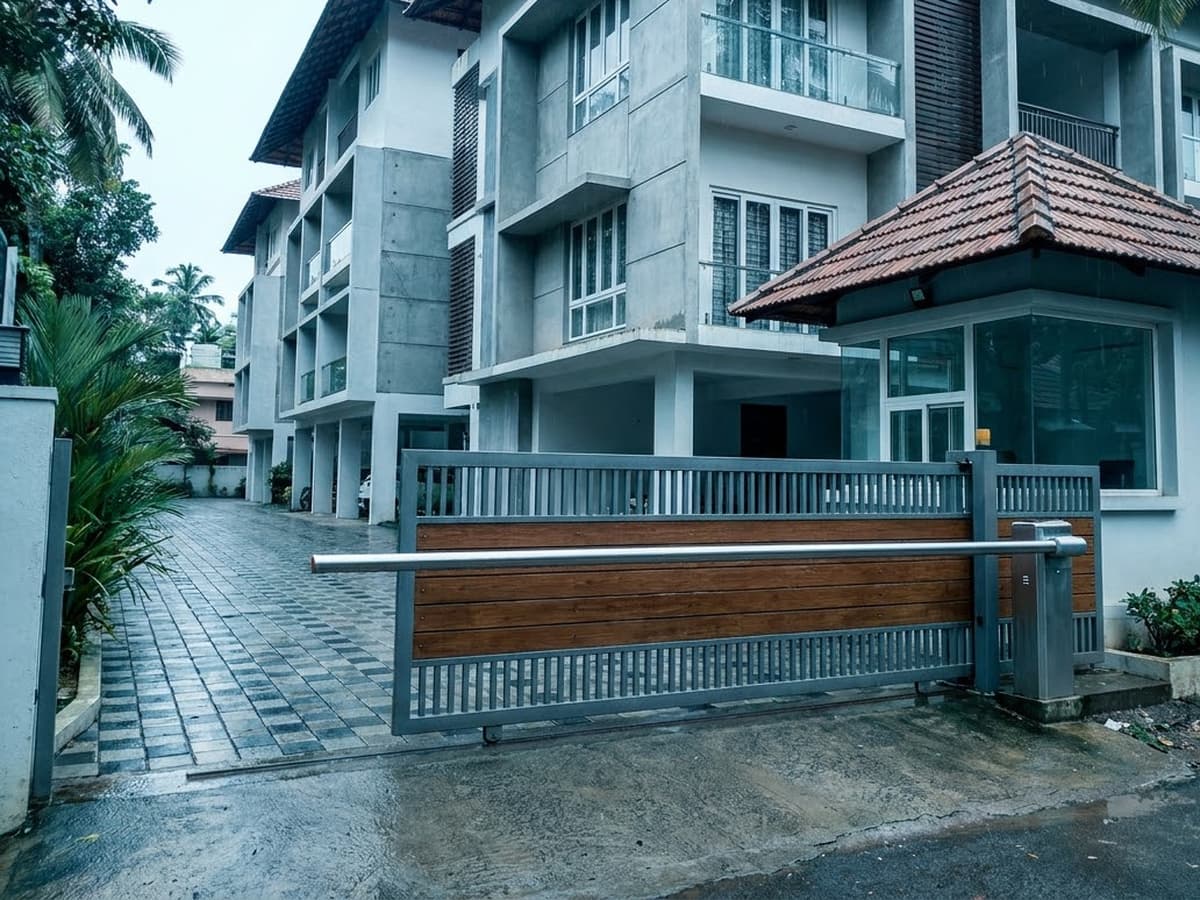
Apartment gate automation: what shared entrances need
A gate serving thirty flats is a different machine from a gate serving one house. Duty cycle, revocable access, visitor handling and who pays for maintenance — what to specify for a shared entrance in Kerala.
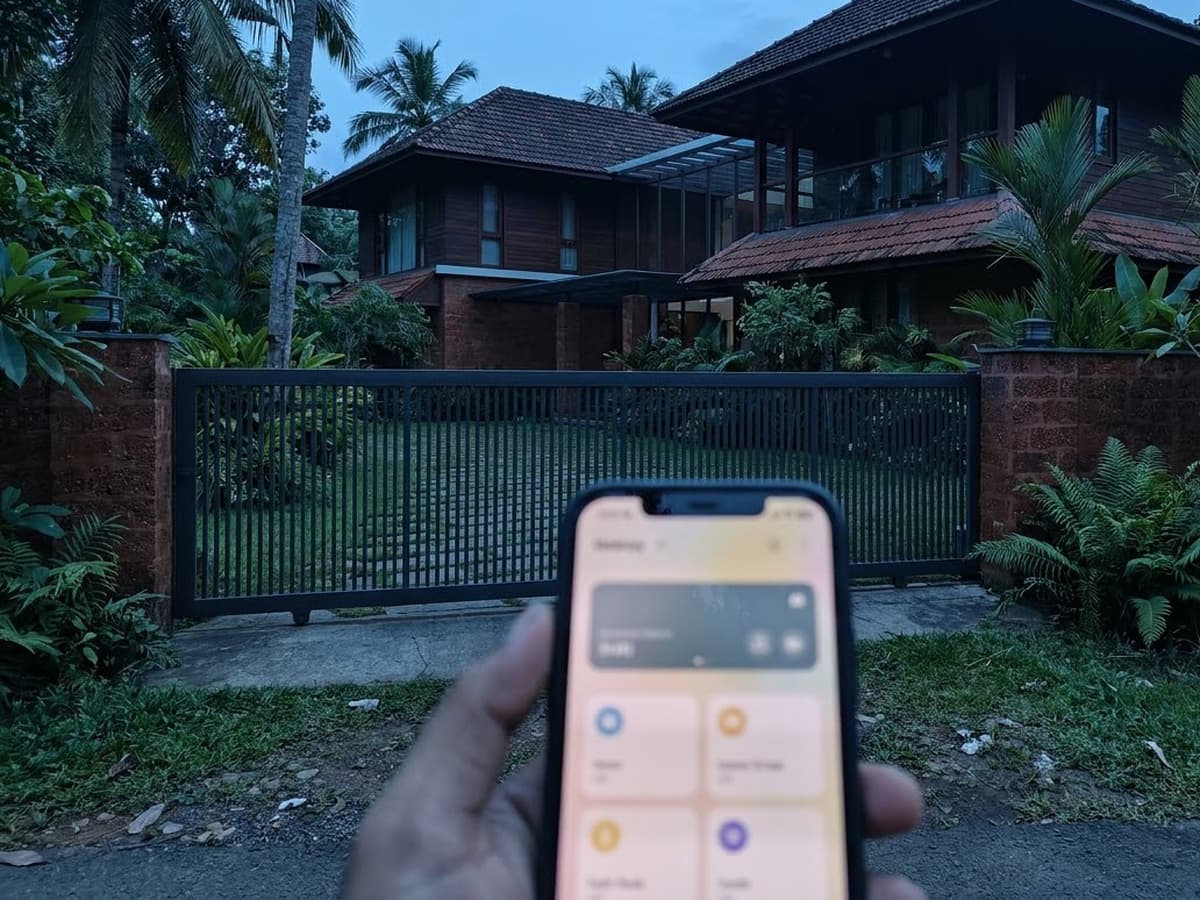
Automatic gates for NRI homes: control your gate from abroad
A house in Kerala that stands empty for months has a different problem from one that's lived in. How app control, battery backup and a local maintenance contract let you open your gate — and trust it — from another country.