
Entrance automation · 7 min read ·
Automatic gate not working? A diagnostic order that saves money
Most automatic gate faults are mechanical, not electronic — and most are diagnosable in ten minutes without tools. Work through them in this order before anyone quotes you for a new motor.
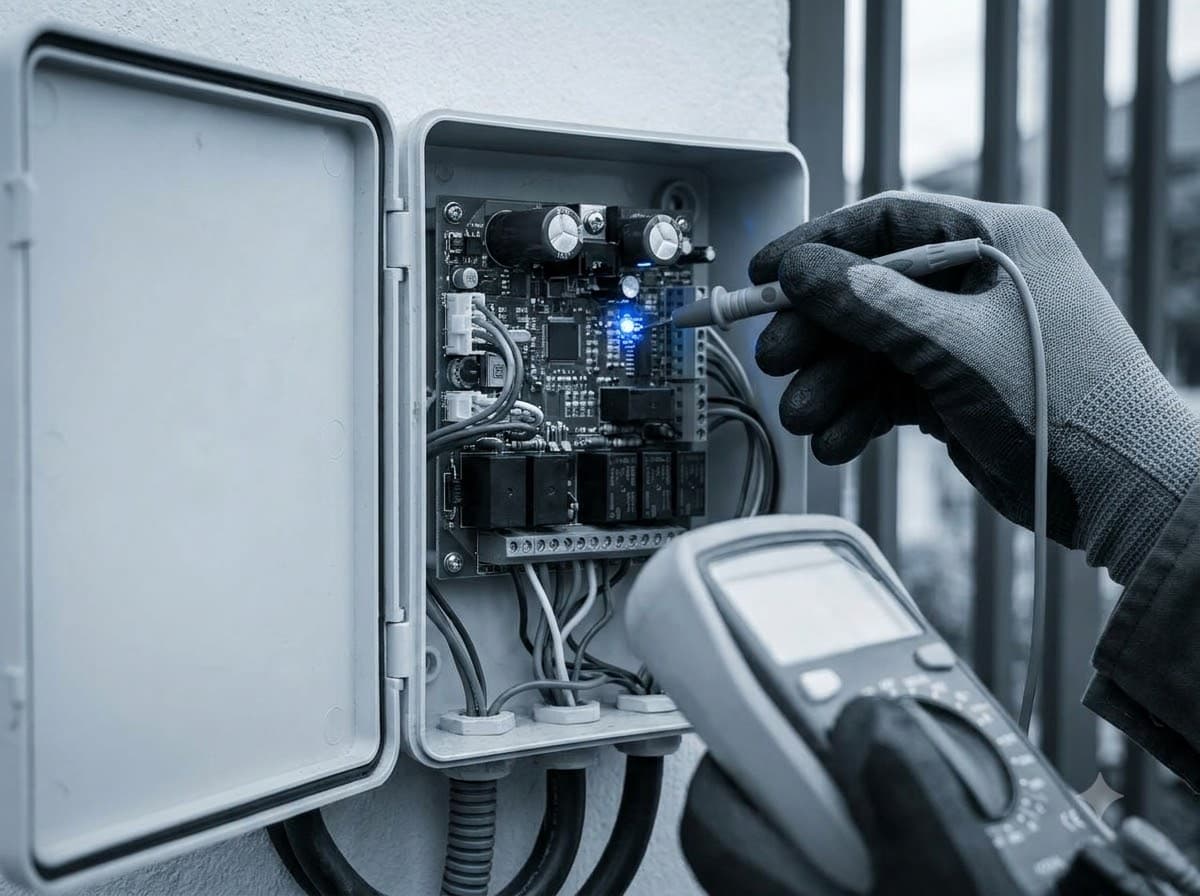
When a gate stops working, the instinct is to assume the motor has failed. It usually hasn't.
Gate automation has one moving machine and a lot of things that make that machine's job harder. Nearly all faults are in the second category — and most are identifiable in ten minutes with no tools, which is worth doing before anyone quotes you for a replacement.
Work through these in order. The order matters: it goes cheapest and most likely first.
1. Disengage the motor and push the gate by hand
Do this first, always. Use the manual release to disconnect the motor, then push the gate slowly through its full travel.
If the gate is hard to push, catches, or gets heavier at some point, you have found your fault — and it is not electrical. The motor was failing because it was being asked to do too much.
Look for:
- Silt, sand or leaf litter in a sliding track — the most common single cause in Kerala, and the easiest to fix
- A bent or unlevel section of track
- Dry, worn or seized hinges on a swing gate
- A post that has shifted, changing the geometry
- A sagging or twisted frame
Clear or repair, then re-test by hand before reconnecting the motor. A gate that doesn't move freely by hand will never work reliably under power, and no electronic adjustment changes that.
2. Check the photocells
If the gate opens but won't close, or reverses immediately on closing, suspect the safety beam.
- Clean both lenses. Dust, monsoon grime, cobwebs. A fogged lens is a sensor that isn't sensing.
- Check alignment. The two units must face each other squarely. A knock, a loosened mount or a shifted post breaks that.
- Look for something in the beam. A plant that's grown, a bin, a parked bicycle, a cobweb strung across.
This is the fault most often misread as "the gate is broken". The gate is working correctly — it has been told something is in the way.
3. Test the access, not the gate
If nothing happens when you press the remote:
- Try a second remote. If it works, the first one's battery or pairing is the problem.
- Try an RFID tag or the wall button, if you have either. If the gate responds to those but not to any remote, the issue is the remotes or the receiver — not the motor.
- Try a tag you know is registered. A tag that stopped working may simply have been cancelled or lost its registration.
This step takes a minute and rules out the entire motor from suspicion. More on access methods in RFID vs remote vs voice.
4. Confirm it has power
If there's no response to anything:
- Look for an indicator light on the control board. Lit means it has power.
- Check the breaker or isolator feeding the gate. They trip, and people forget the gate has its own.
- Consider the backup battery. If mains is genuinely off and the gate isn't running on battery either, the battery has likely reached end of life. It's a consumable, and it declines invisibly — see gates and power cuts.
A board with no light is usually a supply problem, not a dead motor. Remember an AC motor has no battery of its own — if it was wired to the house inverter, check the inverter too.
5. Look for water
If the fault is intermittent, started after heavy rain, or the gate behaves erratically, check for water ingress:
- Conduit ends and cable glands at the motor
- The motor or control enclosure seal
- Standing water at the base of the motor or post
Water in a control board is one of the few genuinely expensive failures. If you find it, stop operating the gate and get it looked at — running a wet board makes it worse.
Symptom table
| Symptom | Most likely cause |
|---|---|
| Stops partway, reverses | Resistance in the gate — track, hinge or frame |
| Opens but won't close | Photocells: dirty, misaligned, or obstructed |
| One remote dead, others fine | That remote's battery or pairing |
| All remotes dead, button works | Receiver or remote pairing |
| Nothing at all, no board light | Power supply, breaker, or exhausted backup battery |
| Works, but slow or noisy | Mechanical wear — track, rollers, hinges |
| Intermittent after rain | Water ingress at cable entries or enclosure |
| Gate "fights" and trips often | Gate needs freeing; do not raise the force limit |
The one thing not to do
If a gate keeps tripping and reversing, do not raise the force limit to make it stop.
The force limit is what makes the gate reverse when it meets an obstruction. A gate that trips during normal operation is telling you something is physically wrong. Turning the limit up silences the message and leaves the gate pushing through resistance — including resistance that happens to be a person.
It's the most common bad repair in this field because it works, briefly, and costs nothing. Gate safety covers why that trade is a bad one.
Repair or replace?
Almost always repair. The economics are clear once you know which parts fail:
Durable: the motor and the control board. These run for years given a gate that moves freely and a dry enclosure.
Wear parts: the backup battery, rollers, hinge pins, remote batteries. All replaceable individually.
The usual actual fault: the mechanics the motor drives. Serviceable.
Replacement genuinely makes sense in two cases. First, the gate structure is finished — frame corroded through, posts needing rebuilding — in which case you're replacing the gate, not the automation. Near the coast this comes up more often, and salt air is why. Second, the original motor was under-specified for the traffic, which happens on apartment and commercial entrances where a residential-rated unit was fitted. That's not a repair; it's correcting the original specification. Apartment gate automation explains how duty cycle drives it.
If your gate is sound but not automated at all, automating an existing gate covers what makes a gate suitable.
When to stop and call someone
Call rather than continue if:
- You find water inside the motor or control enclosure
- The gate is physically damaged — bent track, cracked weld, leaning post
- You'd need to open the control board or change wiring
- The gate moves freely by hand, the sensors are clean and aligned, and it still won't run
- You're being asked to raise the force limit as the fix
That last one is worth repeating. If a quote's solution to a tripping gate is a settings change rather than a repair, get another opinion.
The bottom line
Push the gate by hand first — it answers most questions. Then clean and check the photocells, then test the access separately from the motor, then confirm power. Four steps, no tools, and they cover the large majority of faults. Fix the mechanics rather than the force limit, and expect repair rather than replacement.
See our automatic gate installation and service, or WhatsApp us a short video of what the gate does when you operate it — that's usually enough for us to tell you what we're looking at before we come out. We cover Kottayam, Ernakulam, Pathanamthitta and Alappuzha.
Frequently asked
Common questions on this topic.
Keep reading
More from the ITSolute blog.
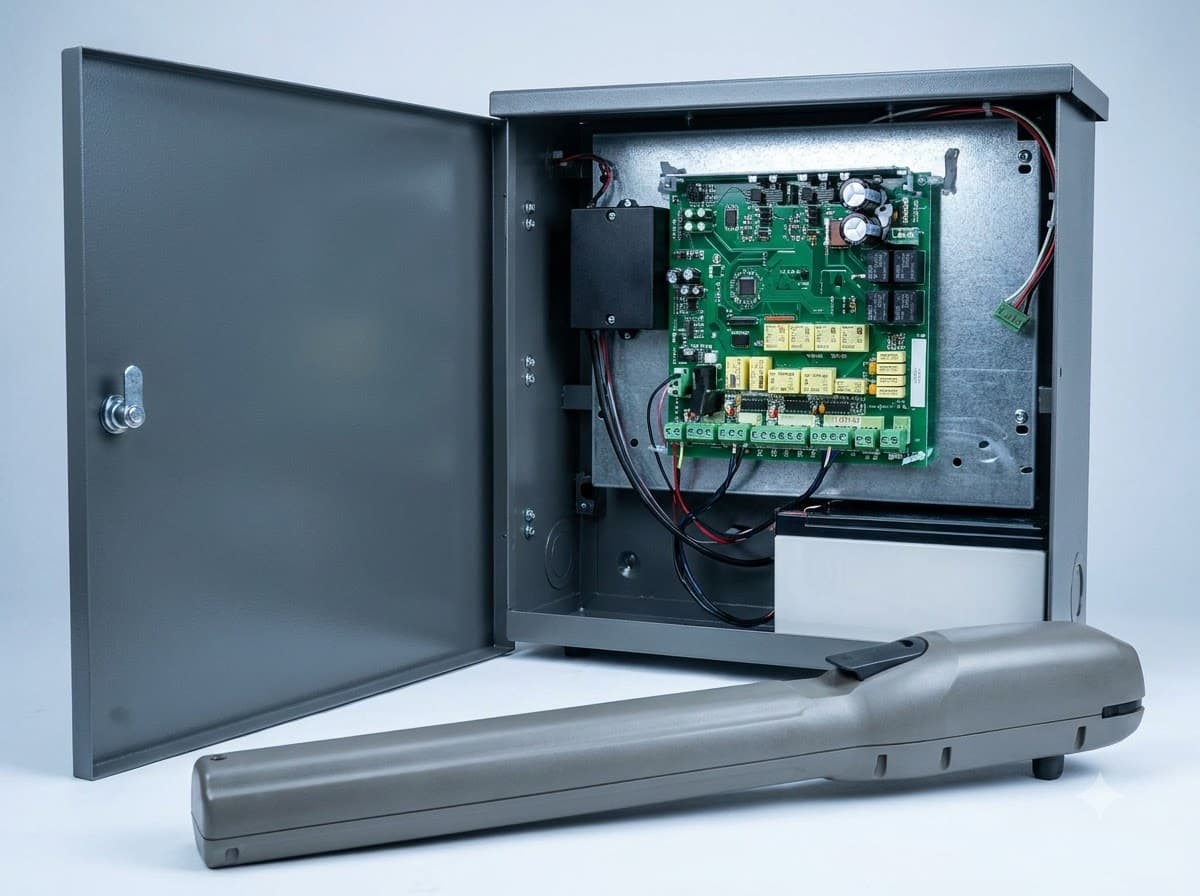
Automatic gates and power cuts: AC, DC and battery backup
A DC motor rides out a power cut on two 12V batteries. An AC motor has no battery of its own but runs from your home inverter connection. Here's the difference, what backup costs, and why the manual release key matters on every gate.
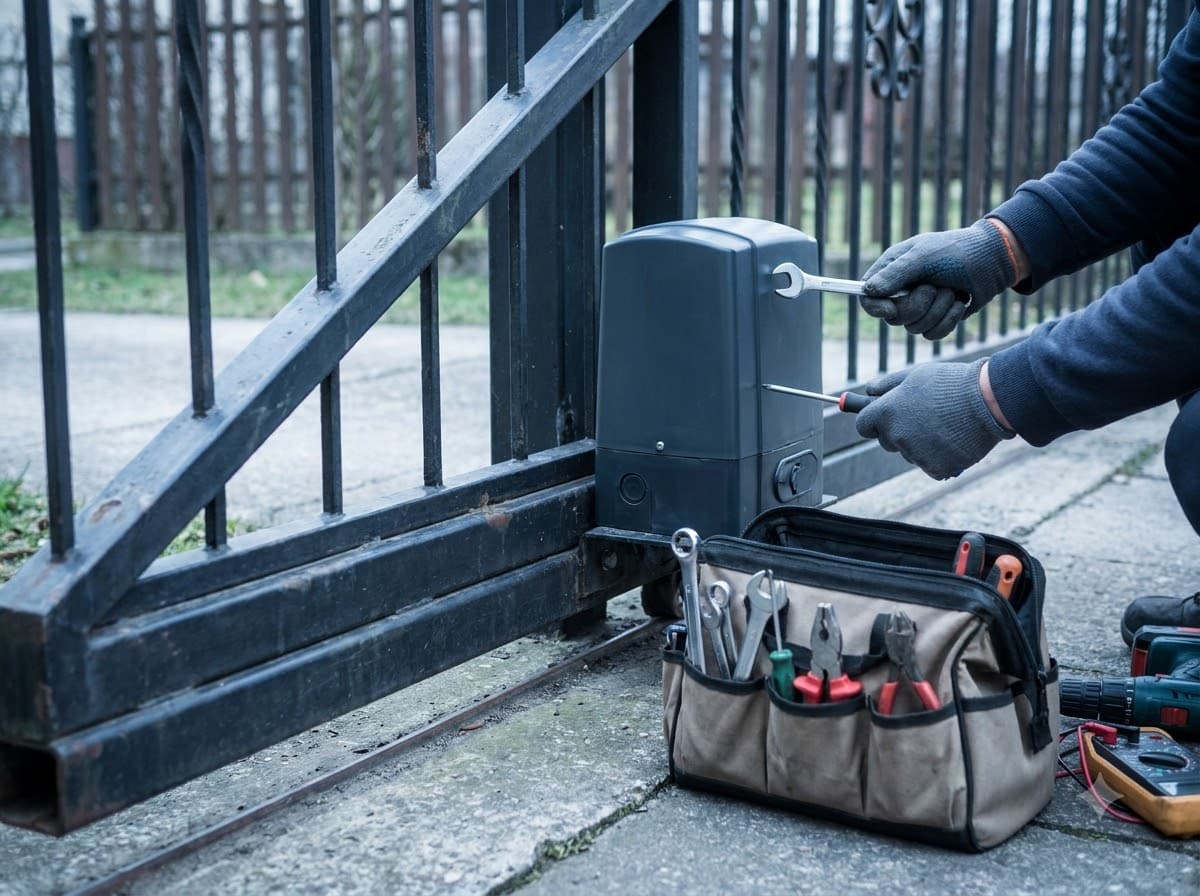
Can you automate an existing gate? A retrofit checklist
You usually don't need a new gate. Here's how to tell whether the gate you already have can be automated, what has to be fixed first, and what it costs to retrofit in Kerala.
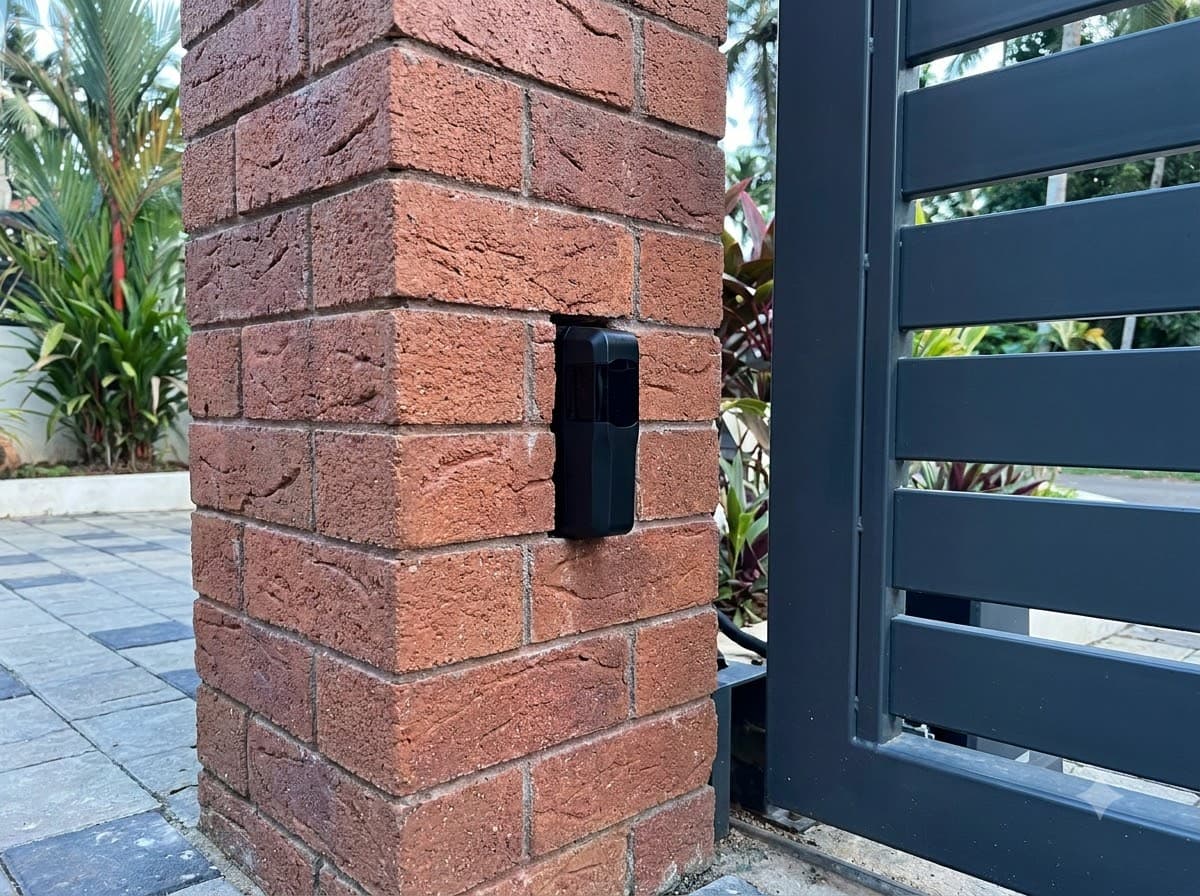
Are automatic gates safe? Photocells, force limits & kids
An automatic gate is a heavy powered machine at child height. Here's what actually makes one safe — photocells, force limits and auto-reverse — and the questions to ask before you accept a quote.