
Entrance automation · 7 min read ·
Apartment gate automation: what shared entrances need
A gate serving thirty flats is a different machine from a gate serving one house. Duty cycle, revocable access, visitor handling and who pays for maintenance — what to specify for a shared entrance in Kerala.
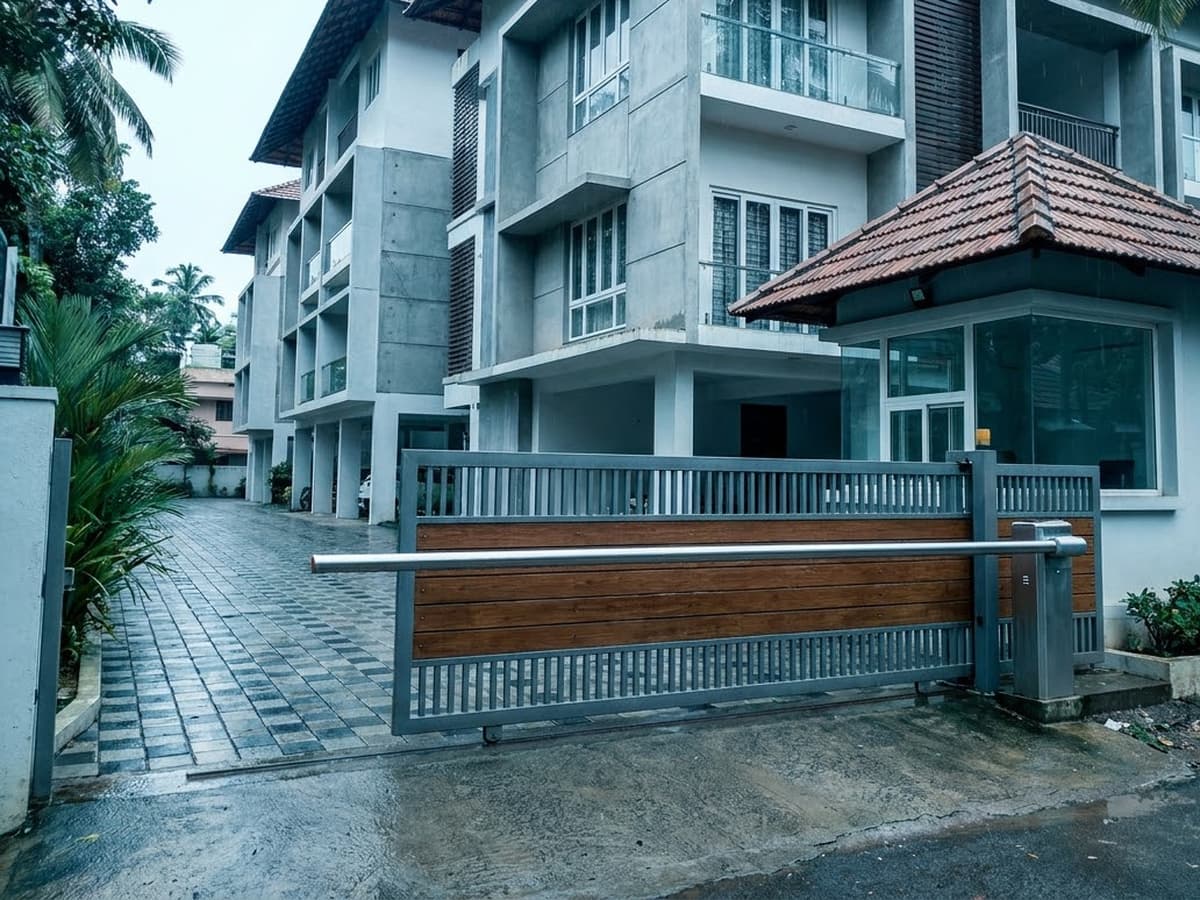
A gate serving one house and a gate serving thirty flats look identical and are not the same machine. The difference isn't the gate; it's everything around it — how often it moves, how many people may open it, who gets in when they have no credential, and who pays when it needs a service.
Specifying a shared entrance as though it were a large house gate is the most common and most expensive mistake in this category.
Duty cycle is the whole specification
Start here, because everything else is cheaper to get wrong.
A house gate opens maybe six to ten times a day. A thirty-flat block, with residents, staff, deliveries and visitors, can easily run three hundred to six hundred cycles a day. Over a year that's the difference between a few thousand operations and roughly two hundred thousand.
Motors are rated for this, and the rating is a real engineering limit, not a marketing tier. A unit specified for intermittent residential use will fail on a shared entrance — not because anything was defective, but because it was the wrong machine for the job.
What makes this painful is the sequence: the cheaper quote wins the committee vote, the gate fails in eighteen months, and the association buys a second gate motor. The saving was never real.
So the first question for any shared entrance is not "what does it cost" but "how many vehicles pass per day, and what cycle rating does that need?" Count it honestly. Residents will underestimate.
Gate, barrier, or both
These solve different problems:
| Gate | Boom barrier | |
|---|---|---|
| Purpose | Secures the boundary | Controls vehicle flow |
| Speed | Slower | A few seconds |
| Stops people on foot | Yes | No |
| High cycle counts | Needs heavy specification | Built for it |
For a complex with real traffic, the common answer is both: the barrier handling vehicles through the day, and the gate closed overnight for the perimeter. A barrier is a traffic device, not a security device — it stops cars, and anyone can walk around it.
If throughput at the entrance is the complaint — cars queuing on the road waiting for a slow gate — the barrier is what fixes it. Boom barrier pricing and sizing covers arm length and the cycle classes.
Access, and who holds it
On a shared entrance, access is an administrative problem wearing a hardware costume.
Use RFID, per vehicle. It's an add-on, quoted after the survey, and on a shared entrance it earns its cost. Not per flat — a flat with two cars needs two tags, or the tags get shared and the register becomes fiction.
Expect turnover. Tenants change. That's the whole argument for tags over remotes on a block: withdrawing access from one remote holder means re-pairing the receiver and re-issuing to everybody, so in practice nobody does it. A tag is revoked on its own.
Keep a written register. The controller stores tag numbers. A list of which number belongs to which flat and vehicle is what makes cancellation possible. Without it you have anonymous numbers and no way to act on a departure.
Keep remotes for the people who need them. Two come with the motor kit, and extras are available — useful for a manager or a maintenance contact. The bulk of residents are better on tags.
The visitor question
Every complex needs a defined answer to: a delivery rider arrives with no credential.
Pick one before installation:
- Guard button — simplest, needs someone present.
- Intercom to the flats — the resident decides, no guard needed.
- A visitor RFID tag held at the gate — handed over and handed back, where a guard is on duty.
If you don't choose, the answer becomes "the guard's phone rings all day", and after a few weeks someone props the gate open. A propped-open gate is the real failure mode of shared entrance automation, and it's always an access-design problem rather than a hardware one.
Safety on a shared entrance
Shared entrances have genuine foot traffic — residents walking out, children, delivery riders — crossing the same opening the vehicles use. That raises the safety bar above a private driveway.
Two things to specify rather than assume:
- More than one photocell pair, or a safety edge. One beam across one line is a single plane. On a busy opening with people moving through it, that's thin coverage.
- A separate pedestrian gate. The single biggest safety improvement available, and the most often skipped. People should not be walking through a vehicle gate at all.
Gate safety covers what the sensors do and don't protect.
Power cuts matter more here
A house gate that stops in an outage is an inconvenience for one family. A shared entrance that stops blocks everybody, including anyone trying to leave.
Battery backup is fitted as standard on our installations, and on a shared entrance two extra points apply:
- The manual release must be known to the security staff, not just to a committee member — and the key must not live behind the gate it opens.
- The backup battery is a wear part, and on a high-cycle gate it works harder. It needs load-testing on a schedule. See gates and power cuts.
Emergency vehicle access is the version of this nobody wants to discover late. An ambulance at a dead gate at 2am is the scenario the manual release exists for.
Decide who owns the maintenance
The organisational point, and the one that decides whether the installation is still working in five years.
A shared gate wears several times faster than a residential one, so quarterly maintenance is realistic rather than cautious. But a gate that belongs to "the association" in the abstract belongs to nobody, and gets serviced when it breaks.
Settle three things in writing at handover:
- Who holds the maintenance contract and what it covers.
- Who keeps the RFID register and processes joiners and leavers.
- Who holds the manual release key, and their backup.
Gate maintenance in Kerala sets out what a service visit actually checks and why the battery and sensors are the items that fail without warning.
What we'd put in a quote for a complex
- A motor rated for the measured daily cycle count, not the gate's weight alone
- A photocell safety sensor pair and 2 remotes included with the motor kit, with RFID tags and battery backup available as add-ons
- Additional photocells or a safety edge where foot traffic justifies it
- A defined visitor method, chosen by the association, not defaulted
- A barrier alongside the gate where vehicle throughput is the real constraint
- A quarterly maintenance schedule with a named owner
- A free site survey first, including an honest cycle count
The bottom line
Specify a shared entrance for the traffic it actually carries, use access credentials you can cancel one at a time, decide the visitor route before installation rather than after, and name someone to own the maintenance. Get those four right and the hardware is the easy part.
See our entrance automation service, or WhatsApp us the number of flats and roughly how many vehicles pass per day, and we'll come back with a specification that matches — then confirm it with a free site survey. We work across Kottayam, Ernakulam, Pathanamthitta and Alappuzha.
Frequently asked
Common questions on this topic.
Keep reading
More from the ITSolute blog.
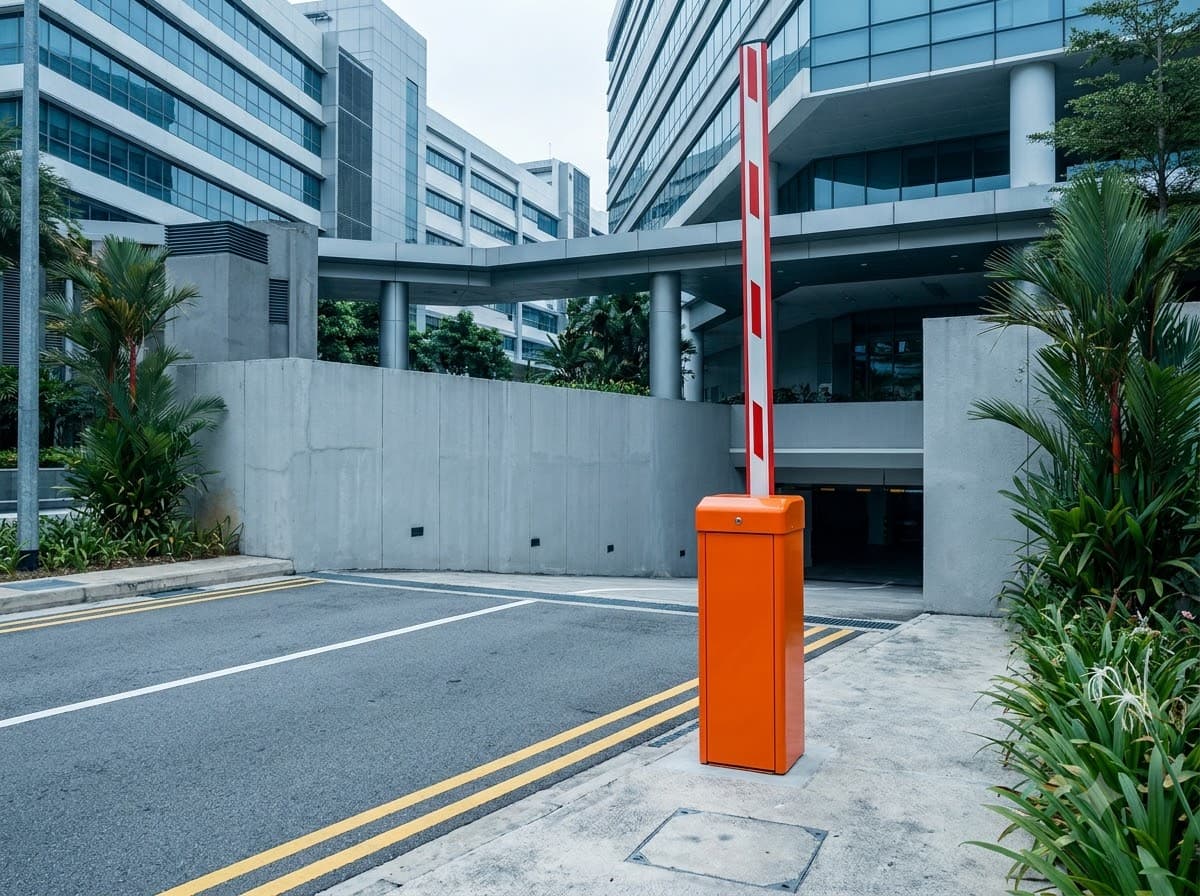
Boom barrier price in Kerala (2026): cost, access options & sizing
What a boom barrier costs to install in Kerala, how to size the arm for your entry, which access method suits your traffic, and why duty cycle matters more than price on a busy gate.
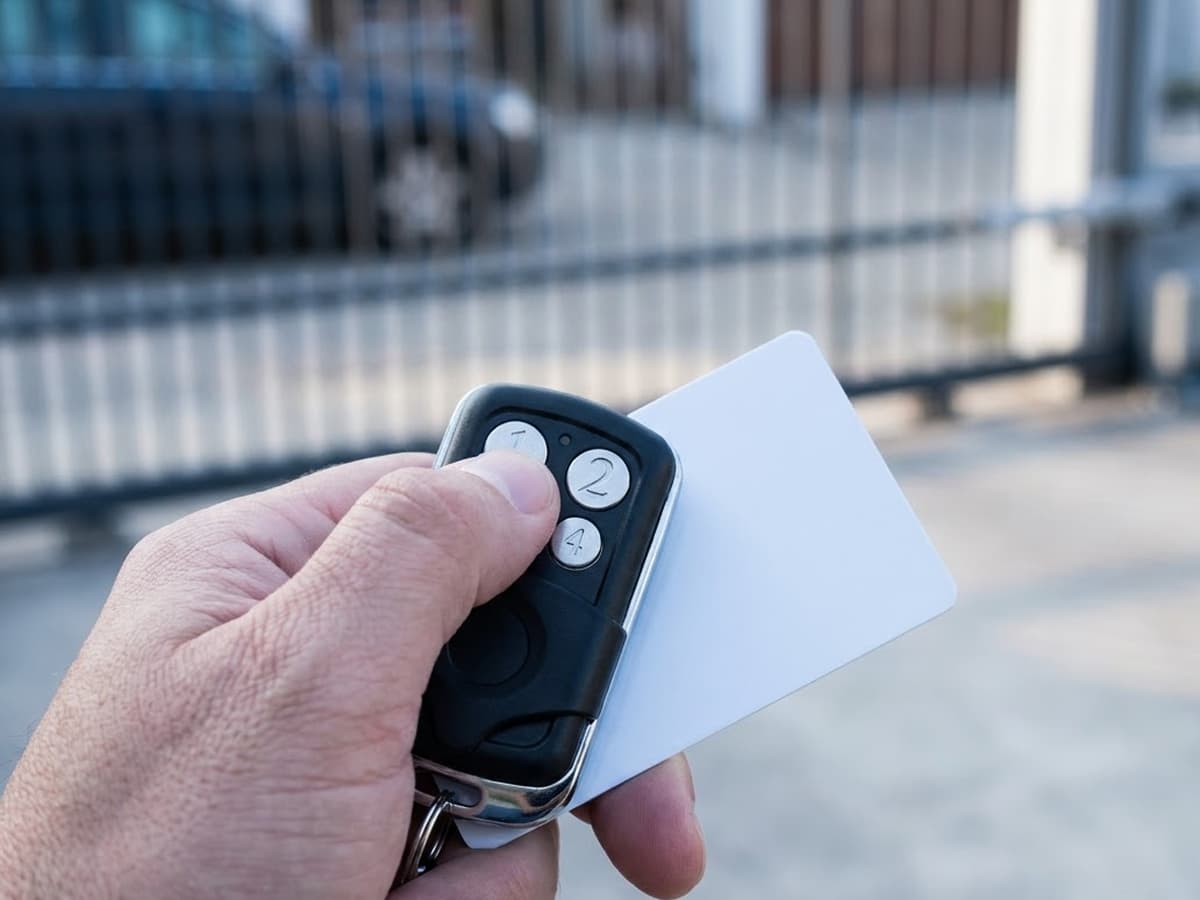
RFID vs remote vs voice: gate access options explained
Two remotes come with every gate. RFID tags are an add-on, voice control needs a DC motor, and every motor has a manual release key. Here's what each one is good for, and which matters on a home versus a block of flats.
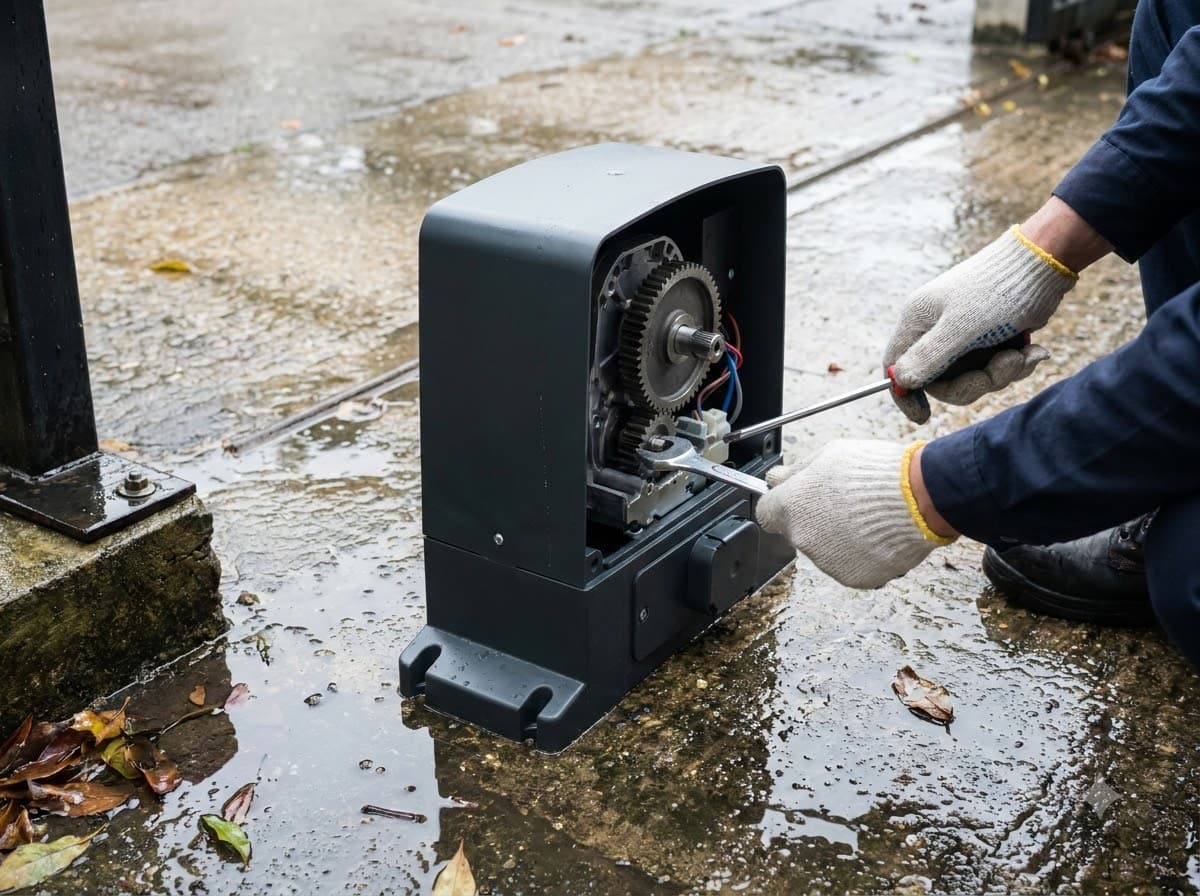
Automatic gate maintenance in Kerala: monsoon, salt air & AMC
Kerala is hard on gate automation — monsoon silt, standing water and coastal salt air all shorten its life. What maintenance actually involves, what you can do yourself, and what an AMC covers.