
Entrance automation · 5 min read ·
Automatic gates and power cuts: AC, DC and battery backup
A DC motor rides out a power cut on two 12V batteries. An AC motor has no battery of its own but runs from your home inverter connection. Here's the difference, what backup costs, and why the manual release key matters on every gate.
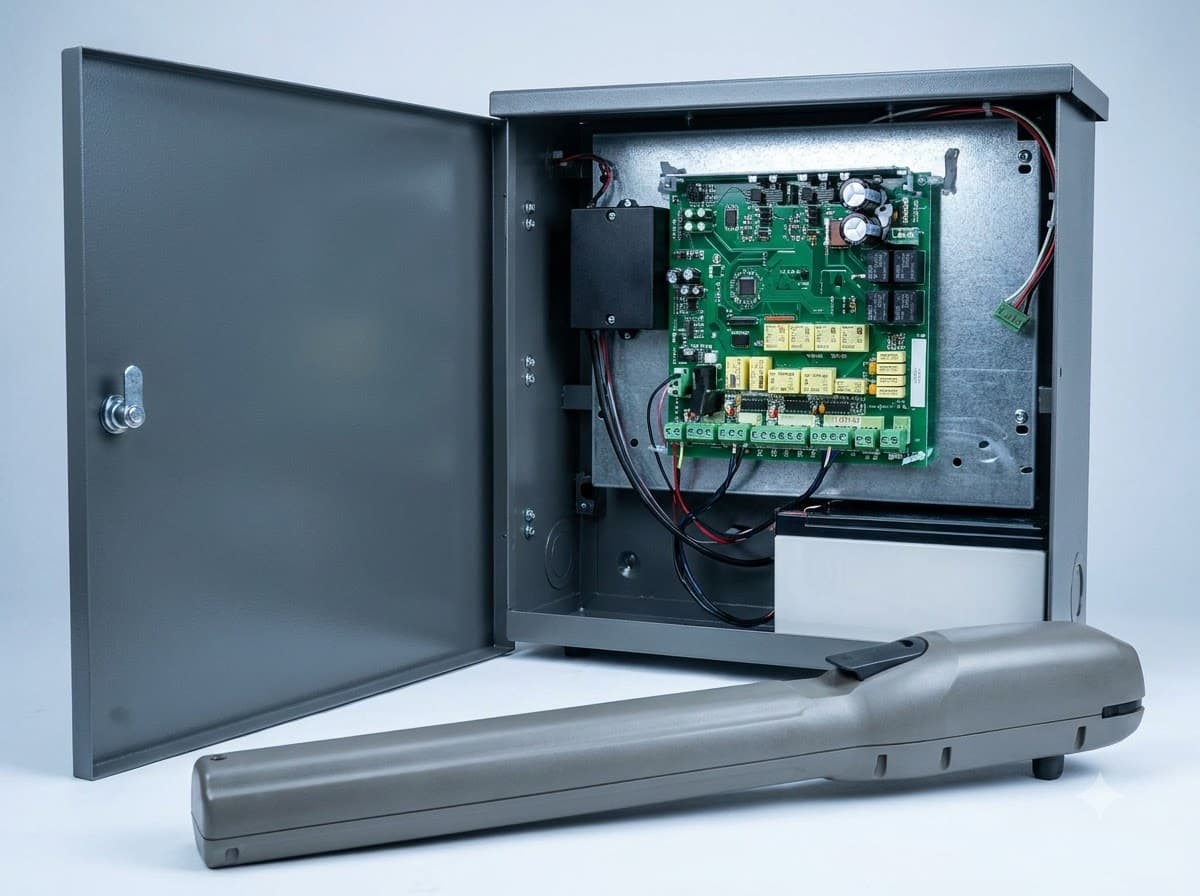
In Kerala, "what happens when the power goes?" isn't a hypothetical. It's the question that should decide which motor you buy.
The answer has one fork in it, and everything else follows from that fork.
Two ways to ride out a cut
A DC motor carries its own battery backup. Two 12V batteries, built into the motor on some brands and a ₹5,500 add-on on others. The control board switches over when the mains drops and the gate opens and closes as normal, with no dependence on anything else in the house.
An AC motor runs from your home inverter. It has no battery of its own, but it doesn't need one if you already have an inverter — we wire the motor to the inverter connection during installation and it keeps working through a cut.
So the real question isn't "which motor survives a power cut" — both can. It's where the power comes from: the gate's own batteries, or the house's inverter.
That shapes the choice. If you already run an inverter, AC is honest value and the lower starting price. If you don't, or you'd rather the gate didn't depend on the house supply at all, DC with its own batteries is the cleaner answer. DC is also smoother and quieter, and it's the only one that can take voice control.
What you should not assume is that backup is included. On a DC motor it's either built in or an add-on, and on an AC motor it's a wiring decision made at installation — so ask which applies before you sign.
Every motor has a manual release
Whatever you buy, there is a key that disengages the drive so the gate can be pushed by hand.
Three things to insist on:
- Be shown it at handover, physically, and try it yourself once.
- Know where the key lives, and make sure it isn't only inside the gate you're locked out of. This sounds obvious. It is the single most common lockout we get called about.
- Make sure household staff or security know it too, not just you.
On a boom barrier the equivalent matters even more, because emergency vehicles may need the arm raised immediately.
How DC battery backup works
The two 12V batteries sit with the control board at the motor. In normal operation mains power runs the gate and trickle-charges them. When the mains drops, the board switches over.
Two consequences worth knowing:
-
It is independent of your house supply. The backup is local to the gate, on its own wiring — it doesn't care whether your inverter is working, or whether you have one.
-
It is always either charging or discharging. Batteries kept in a hot enclosure and cycled regularly age faster than the datasheet suggests. In Kerala's heat, assume the shorter end of any stated life.
How many openings do you really get?
Be sceptical of anyone who answers this with a confident single number. It depends on gate weight, battery capacity, battery age and how long the outage runs.
A healthy backup on a typical residential gate covers a normal day's use without drama. The useful way to think about it isn't the day-one number — it's that the number declines, and you won't be told when.
What to ask a quote for
- Is this motor AC or DC? Everything else follows from the answer.
- If DC: are the two 12V batteries built in, or are they the ₹5,500 add-on?
- If AC: will you wire it to our inverter connection, and is that in the installation quote?
- Are the batteries replaceable, standard parts, so they can be swapped in a few years without replacing the control board?
- Where is the manual release, and who will be shown it?
- Is a photocell pair included? It should be — that's the safety sensor, and it comes with every installation we do.
A quote that's noticeably cheaper is often an AC motor being compared against a DC one. That isn't a discount on the same system — it's a different system, and the power-cut behaviour is the difference.
Where the house inverter fits
For an AC motor, the inverter is the answer — it's what keeps the gate working, and wiring it in is a decision made at installation rather than an upgrade afterwards.
For a DC motor, you don't need it: the motor has its own batteries. Feeding it from the inverter as well is a reasonable belt-and-braces addition, but it's not a replacement for the motor's own backup, and it makes the gate dependent on another system's health.
The maintenance point
Where backup batteries are fitted, they are the one part guaranteed to need replacing. Everything else — motor, board, sensors — should run for years with adjustment. Batteries are a consumable, and their decline is invisible until the day it matters. The same is true of the inverter battery an AC gate depends on.
That's the practical argument for an AMC on a DC gate: the visit checks battery health, sensor alignment, force limits, and the track or hinges, which together are almost everything that causes a gate to fail.
The bottom line
Decide AC or DC on whether you already have a house inverter. If you do, AC is honest value and we wire it in. If you don't, DC's own two 12V batteries get you the same result without depending on the house supply. Whichever you pick, learn where the manual release key is and don't keep the only copy behind the gate.
See our automatic gate installation service for what the starting price covers, or WhatsApp us if you have a gate already and aren't sure which motor it has. We cover Kottayam, Ernakulam, Pathanamthitta and Alappuzha.
Frequently asked
Common questions on this topic.
Keep reading
More from the ITSolute blog.
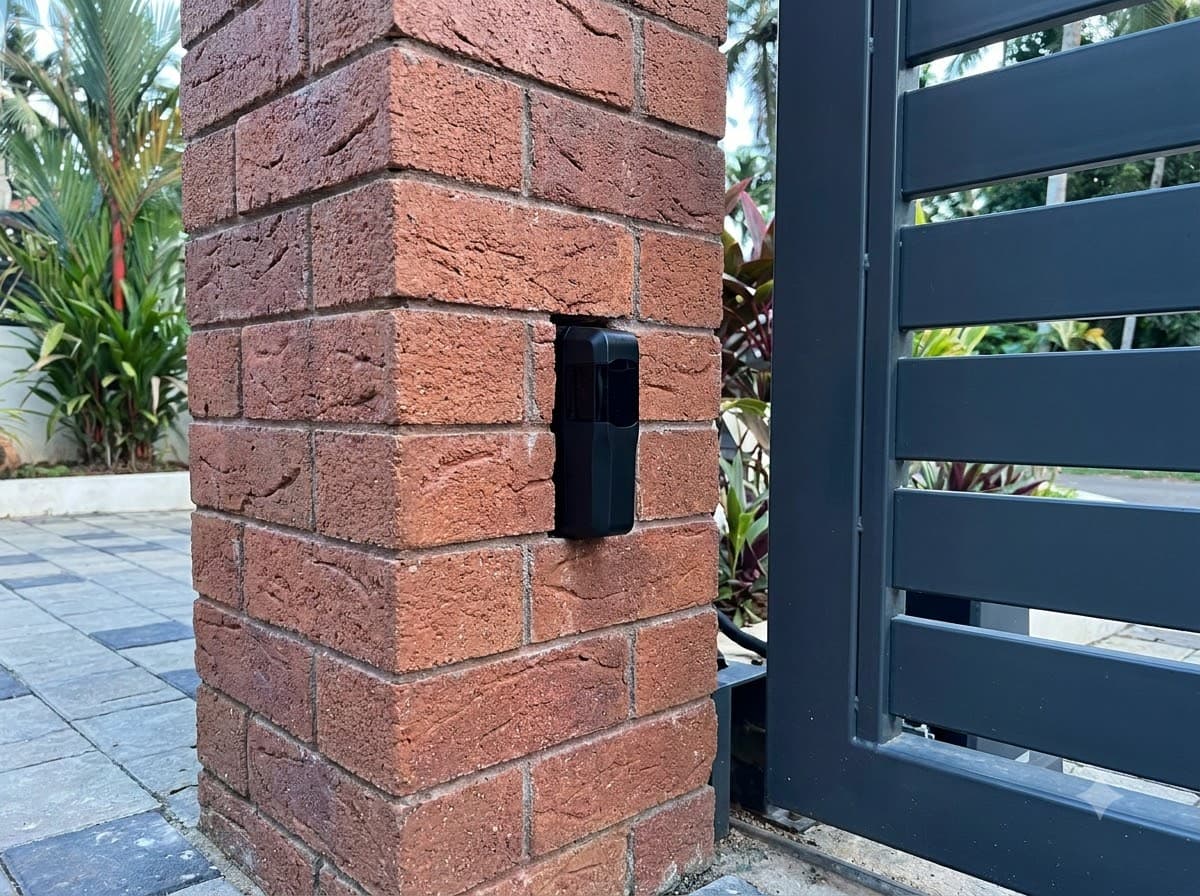
Are automatic gates safe? Photocells, force limits & kids
An automatic gate is a heavy powered machine at child height. Here's what actually makes one safe — photocells, force limits and auto-reverse — and the questions to ask before you accept a quote.
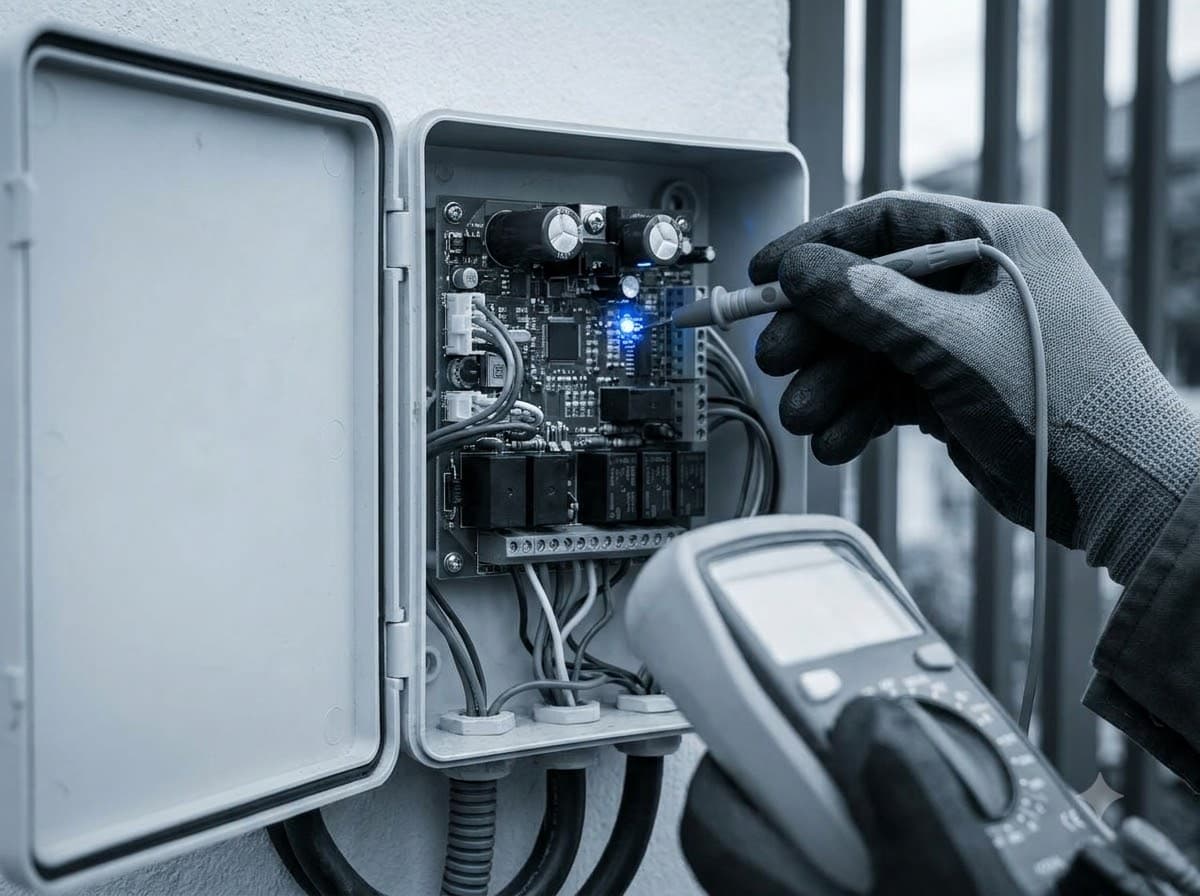
Automatic gate not working? A diagnostic order that saves money
Most automatic gate faults are mechanical, not electronic — and most are diagnosable in ten minutes without tools. Work through them in this order before anyone quotes you for a new motor.
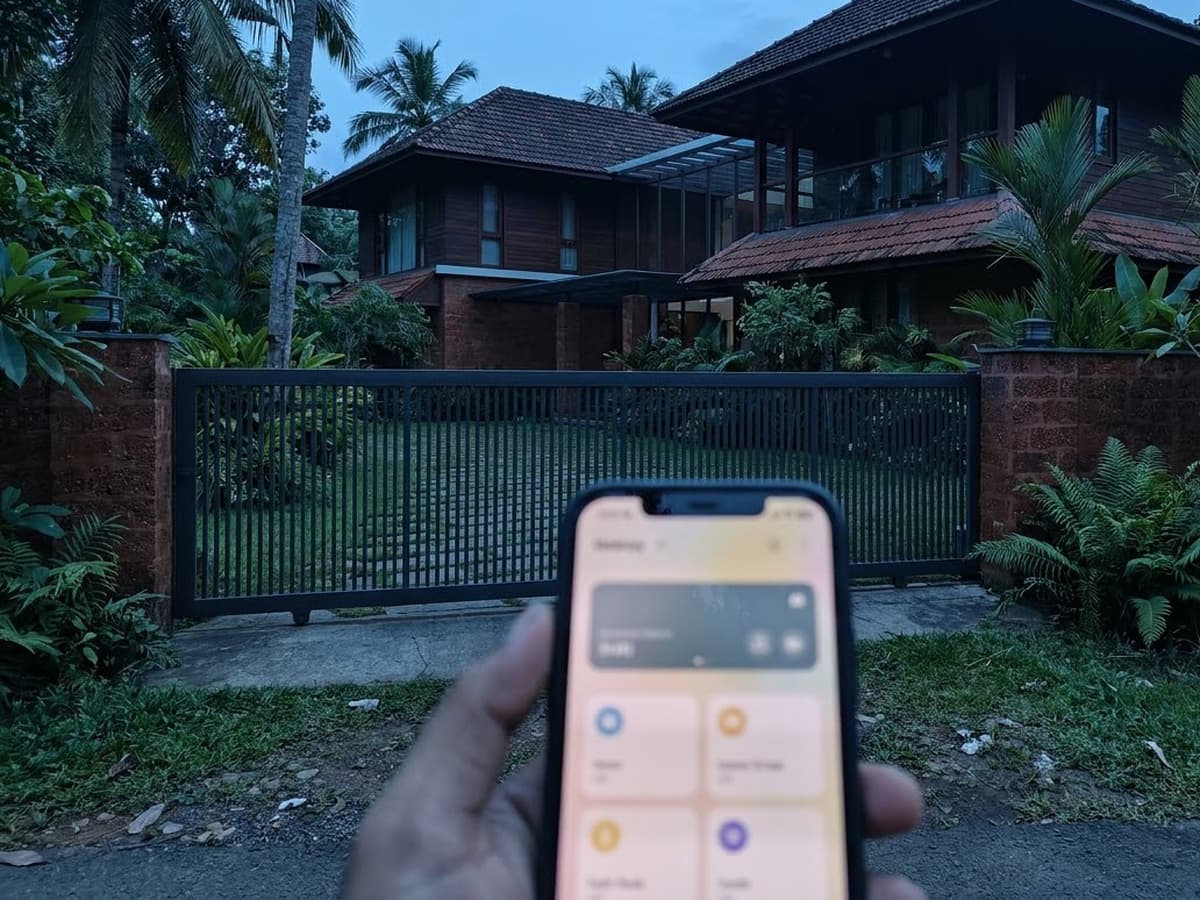
Automatic gates for NRI homes: control your gate from abroad
A house in Kerala that stands empty for months has a different problem from one that's lived in. How app control, battery backup and a local maintenance contract let you open your gate — and trust it — from another country.