
Entrance automation · 6 min read ·
Are automatic gates safe? Photocells, force limits & kids
An automatic gate is a heavy powered machine at child height. Here's what actually makes one safe — photocells, force limits and auto-reverse — and the questions to ask before you accept a quote.
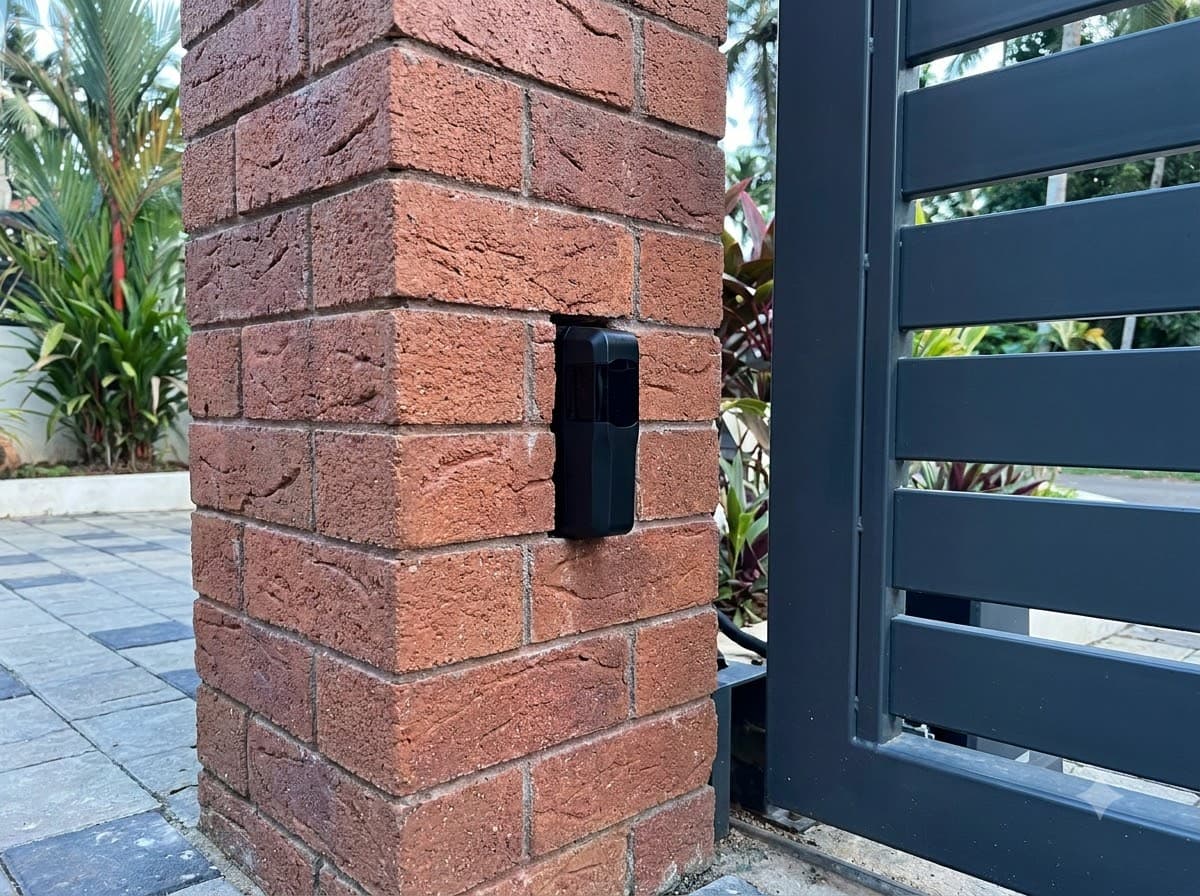
Most conversations about gate automation are about convenience. This one isn't.
An automated gate is a few hundred kilograms of steel, powered, moving across a gap at exactly the height of a child's chest. That's not an argument against automating it — it's an argument for understanding which parts of the system are the safety parts, because those are the parts a cheap quote removes.
The three things that make a gate safe
1. Photocells. A matched pair mounted either side of the opening: one sends an infrared beam across, the other receives it. Break the beam while the gate is closing and the gate stops and reverses.
This is the primary safety device. It works whether the obstruction is a child, a pet, a bicycle or a car bumper, and it works whether or not anyone is paying attention — which is the point.
2. The force limit. A setting on the control board for how much resistance the gate may meet before concluding something is in the way and reversing.
3. Siting and timing. Where the gate travels, what's beside it, and how long it waits before closing. A gate that starts closing the instant a car's tail clears the beam behaves differently from one that waits.
All three are fitted and set as standard on every installation we do, along with the motor kit and two remote controls.
Where the force limit goes wrong
This is worth dwelling on, because it's the failure mode that looks like everything is fine.
The force limit exists to detect obstructions. But it can't tell the difference between a child and a stiff hinge. So if a gate binds — a silted track, a dry hinge, a sagging frame — the gate trips its limit during normal operation and the owner complains that the gate keeps stopping.
The wrong fix, and a common one, is to turn the force limit up until the gate stops complaining. Now the gate pushes through the stiff spot. It will also push through anything else.
The right fix is to repair the gate so it moves freely, then set the force limit where it belongs. This is why we check gate movement by hand before quoting automation at all — a gate that doesn't move freely can't be made safe by adjusting software. Automating an existing gate covers that condition check in detail.
If your gate has started stopping mid-travel, that's a symptom to diagnose rather than dial out — see when an automatic gate stops working.
What photocells can and can't do
Worth being precise, because people over-trust them.
They do detect anything crossing the beam line while the gate moves.
They don't protect the area outside the beam. A beam at one height, across one line, is one plane. A child standing beside the gate, in the path of a sliding leaf but not across the opening, isn't in that plane.
Which is why siting matters. Two practical rules:
- A sliding gate's parking run is part of the machine. The space the gate slides into is a moving pinch point against the wall or fence. It shouldn't be a place anyone stands, and it shouldn't be where the bins live.
- A swing leaf's arc is part of the machine. The gap that closes between an opening leaf and the wall behind it is a crush point.
On sites with real foot traffic — apartments especially — an additional photocell pair or a safety edge is worth specifying rather than assuming one pair covers everything. Apartment gate automation goes into what shared entrances need.
Pedestrians should not use the vehicle gate
The single biggest safety improvement on most sites isn't a sensor. It's a separate pedestrian gate.
A vehicle gate is designed to move a large mass across a wide opening. People walking through a vehicle gate — especially children, and especially while it's moving — are using it for something it isn't built for. Where the layout allows a small side gate for people, that's a better answer than any amount of sensing on the main gate.
Questions to ask before you accept a quote
- How many photocell pairs, and where will they be mounted? "Sensors included" isn't an answer; a position is.
- Will the force limit be set with the gate in its actual condition — and does the gate need any work first?
- Is there an auto-close timer, and how long?
- Where is the manual release, and who will be shown it?
- Is there a separate pedestrian route, or will people be walking through the vehicle gate?
- For shared or high-traffic sites: is one photocell pair really enough?
A quote that's meaningfully cheaper than the others has usually answered one of these by omission. Our price breakdown covers what the standard inclusions should cost.
Safety degrades quietly
The uncomfortable part: a gate that was safe on handover day does not stay safe by itself.
- Photocells drift out of alignment — a knock, a mounting that loosens, or a post that shifts. A misaligned pair either nuisance-trips or, worse, reads as clear when it isn't.
- Lenses get dirty. Dust, cobwebs, monsoon grime. A blocked lens is a sensor that isn't sensing.
- Gates get stiffer. Silt in the track, dry hinges — and with that, the temptation to raise the force limit.
None of this announces itself. Checking sensor alignment, lens cleanliness and force settings on a schedule is a large part of what gate maintenance is for, and it's the main reason an AMC on an automated gate is worth more than the convenience of someone else greasing the hinges.
The bottom line
Automate the gate — but treat the photocells and the force limit as part of the gate, not as accessories. Keep people out of the vehicle gate's path where you can, have someone check the safety settings periodically, and be suspicious of any quote that is cheaper because it fits fewer sensors.
See our automatic gate installation service for the standard specification, or WhatsApp us if you have an automated gate already and aren't certain its sensors still work. We cover Kottayam, Ernakulam, Pathanamthitta and Alappuzha.
Frequently asked
Common questions on this topic.
Keep reading
More from the ITSolute blog.
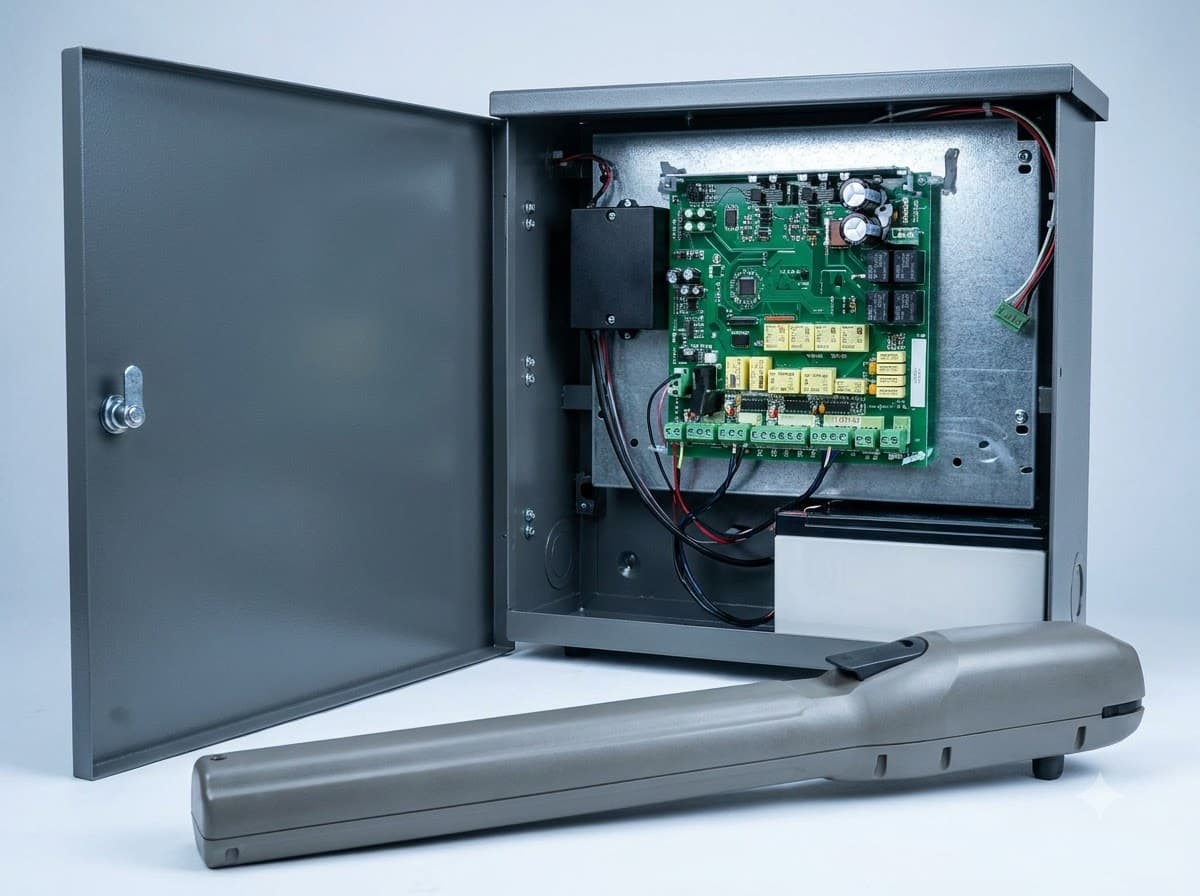
Automatic gates and power cuts: AC, DC and battery backup
A DC motor rides out a power cut on two 12V batteries. An AC motor has no battery of its own but runs from your home inverter connection. Here's the difference, what backup costs, and why the manual release key matters on every gate.
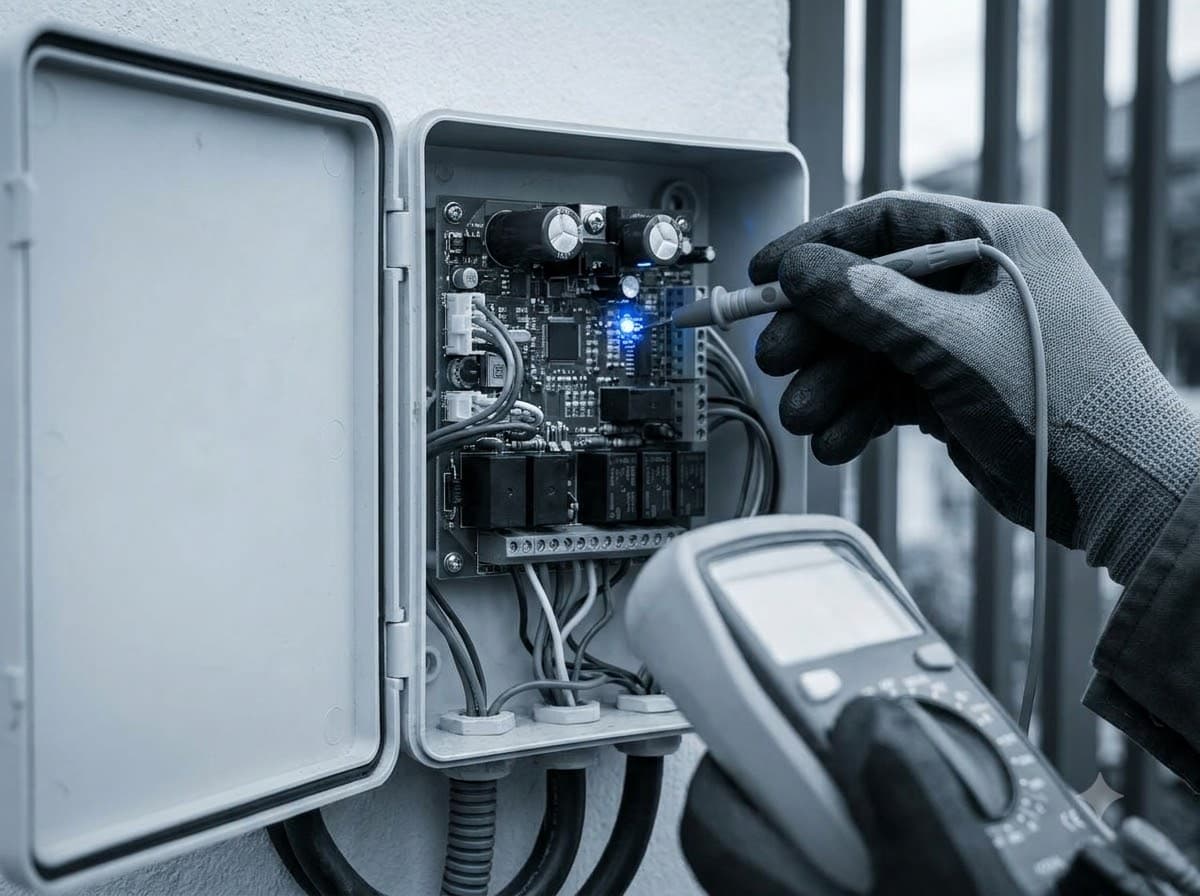
Automatic gate not working? A diagnostic order that saves money
Most automatic gate faults are mechanical, not electronic — and most are diagnosable in ten minutes without tools. Work through them in this order before anyone quotes you for a new motor.
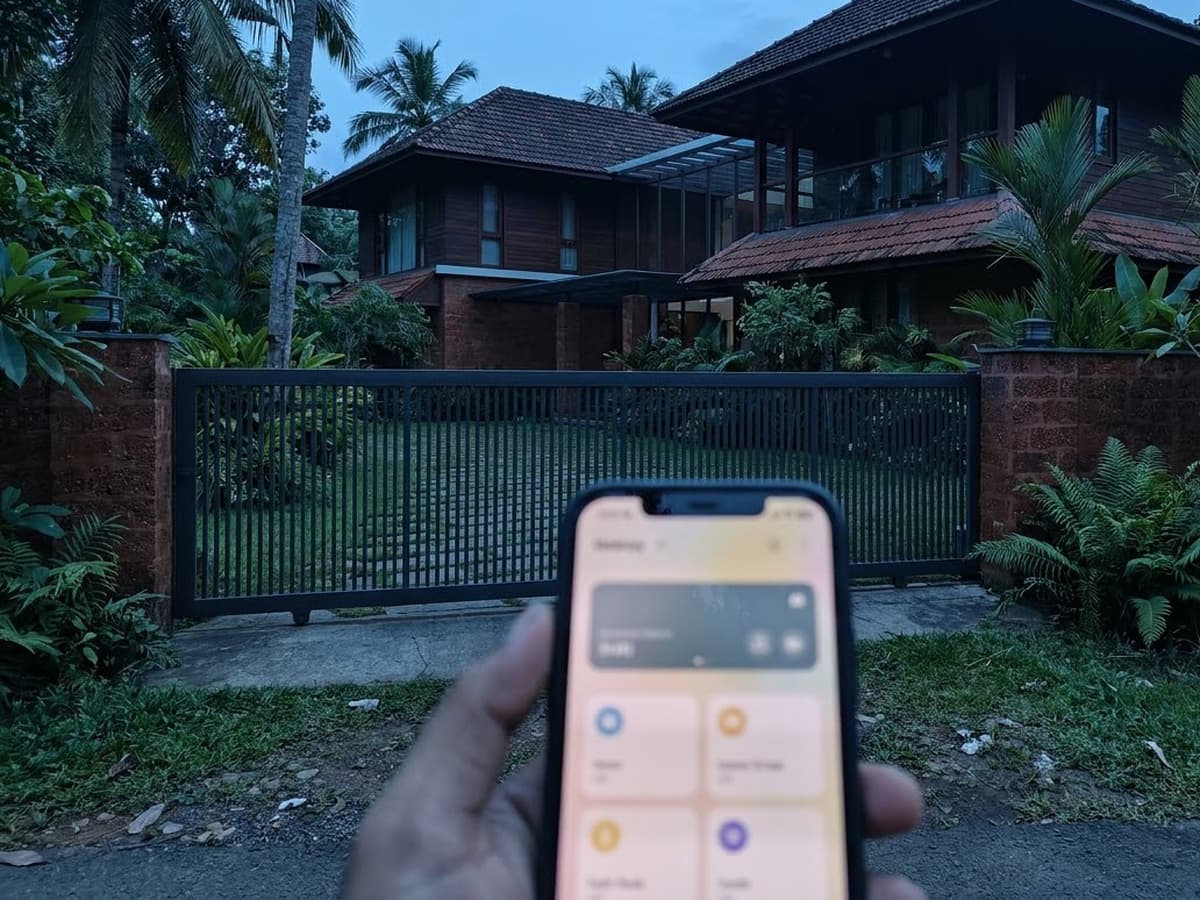
Automatic gates for NRI homes: control your gate from abroad
A house in Kerala that stands empty for months has a different problem from one that's lived in. How app control, battery backup and a local maintenance contract let you open your gate — and trust it — from another country.