
Entrance automation · 5 min read ·
RFID vs remote vs voice: gate access options explained
Two remotes come with every gate. RFID tags are an add-on, voice control needs a DC motor, and every motor has a manual release key. Here's what each one is good for, and which matters on a home versus a block of flats.
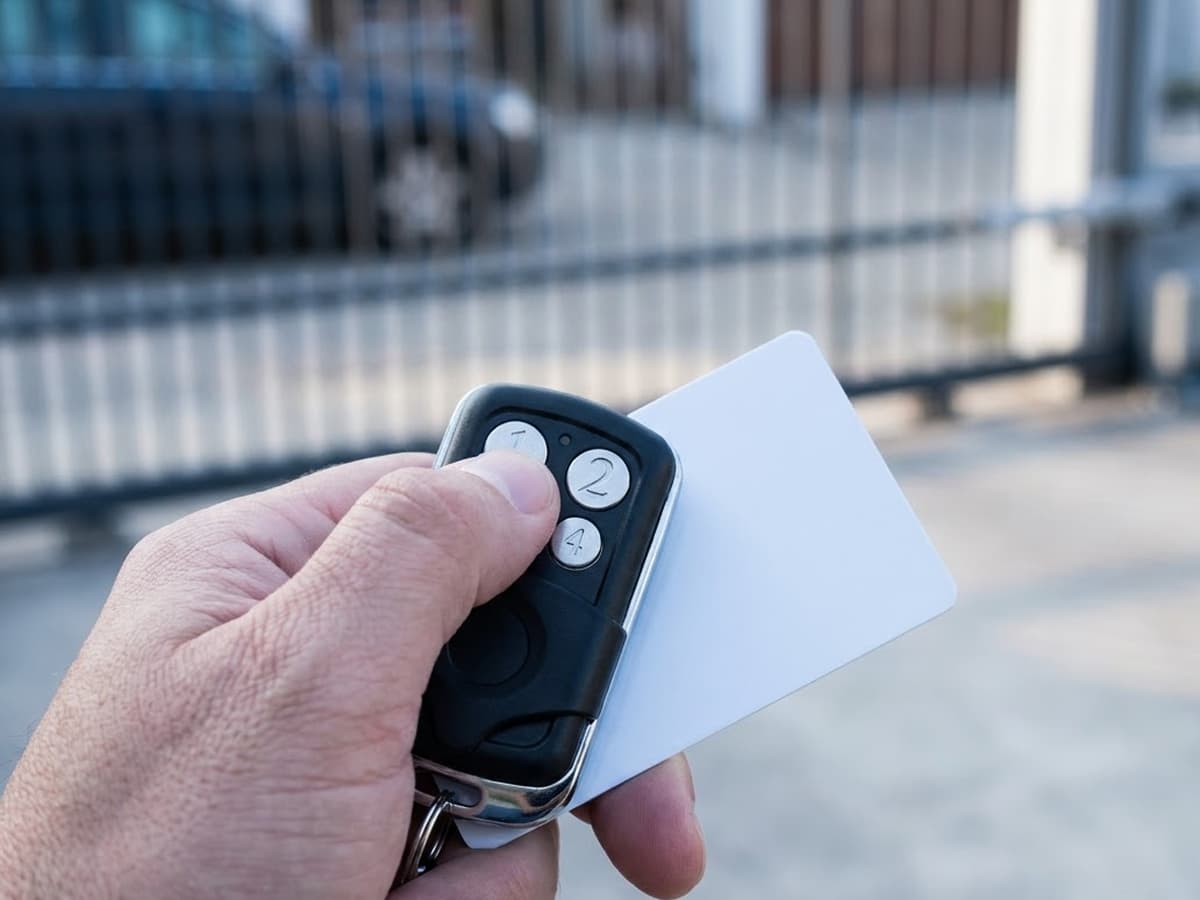
Access is the part of gate automation people think least about before buying and complain about most afterwards. The hardware works; the awkwardness is almost always administrative — somebody needs in and the person with the remote isn't home.
Here's what you actually get, and how to think about it.
The four ways in
Remote control. The primary method, and the one every installation uses. Two remotes come with every motor kit, and extra remotes are available if more people need one.
Voice and phone control — DC motors only. A WiFi smart-switch module wires into the motor's remote-control input and gives you Alexa or Google Home control, plus phone control through the same app. This is a genuine fork in the road: AC motors cannot take it. If opening the gate from your phone matters, you are choosing a DC motor.
RFID tags and cards — an add-on. A reader at the gate recognises a tag or card as it comes close. Issued per person or per vehicle, and revoked the same way. Not part of the starting price; quoted after the free site survey.
The manual release key. Every motor has one. It disengages the drive so the gate can be pushed by hand.
How many remotes do you actually need?
Two is the default, and for a household with one or two drivers it's usually right. The question worth asking before handover is: who needs to get in without waiting for somebody else?
- A second driver in the household — yes.
- A family member who comes and goes on their own schedule — yes.
- A caretaker or gardener who comes weekly — usually yes, if the house is often empty.
- A delivery that comes once — no. Somebody opens it.
Count those people, and order the extra remotes at the time of the quote rather than discovering the gap in week two.
Shared entrances are a different problem
On an apartment block or an office compound the sums change. Thirty flats with two cars each is sixty people who might want to open the gate, and sixty remotes is a lot of hardware to issue and keep track of.
This is where RFID earns its add-on cost. A tag is issued per flat or per vehicle and revoked individually — so when a tenant moves out you cancel that tag and nobody else is disturbed. With remotes, withdrawing access from one person means re-pairing the receiver and re-issuing to everybody, which in practice means nobody ever does it.
The usual arrangement on a block: RFID tags for residents, remotes for the people who need one, and a guard opening for visitors. Worth deciding deliberately, because the default outcome is that somebody props the gate open. Apartment gate automation goes through the rest of the shared-entrance decisions.
The honest trade-off between the two
A remote is anonymous. The gate knows a valid signal arrived, not who sent it. If one goes missing, the fix is re-pairing the receiver — which stops the lost one working but means re-pairing the others too.
An RFID tag is the opposite: it's tied to a person or a vehicle, so losing one is a single revocation rather than a job for everybody. That's the whole reason it's worth paying extra for on an entrance where the list of users changes.
For a household of two or three remotes, none of this matters and remotes are simpler. The moment the list starts changing — tenants, staff, drivers — it matters a lot.
Where voice control earns its place
Voice and phone control is the feature people ask about first and, honestly, the one that matters least day to day — you're usually in the car with a remote in reach.
Where it genuinely earns its keep is when you're not there: letting a relative or a caretaker in while you're away, or opening for a delivery you weren't expecting. That makes it most valuable on a house that stands empty for stretches, which is why it comes up constantly with homes kept for a family abroad — see automatic gates for NRI homes.
The caveat: it depends on the house having power and a working internet connection. When those are down, you're back to the remote and the manual release. That's not a reason to skip it — it's a reason not to make it the only way in.
Access is not safety
Worth saying plainly, because the two get conflated.
A remote controls who may open the gate. It does nothing about what is in the way when the gate moves. That's the job of the safety sensors — a photocell pair is included with every installation — and the motor's force limit. Gate safety covers what those do and don't protect.
The two interact in one way worth knowing: the more hands-off the access, the more the sensors are doing the thinking. If you're opening the gate from your phone from another city, you cannot see what's in front of it.
The bottom line
Two remotes come in the box; work out before handover whether you need more. If the list of people who may open the gate changes — tenants, staff, drivers — price the RFID add-on at survey stage, because revoking one tag beats re-pairing everybody. Add voice control if you want to open the gate when you're not there, remembering that's really a decision to buy a DC motor. Know where the manual release key is. And don't mistake any of it for a safety feature.
See our automatic gate installation service, or WhatsApp us how many people need to open your gate and we'll tell you what fits. We cover Kottayam, Ernakulam, Pathanamthitta and Alappuzha.
Frequently asked
Common questions on this topic.
Keep reading
More from the ITSolute blog.
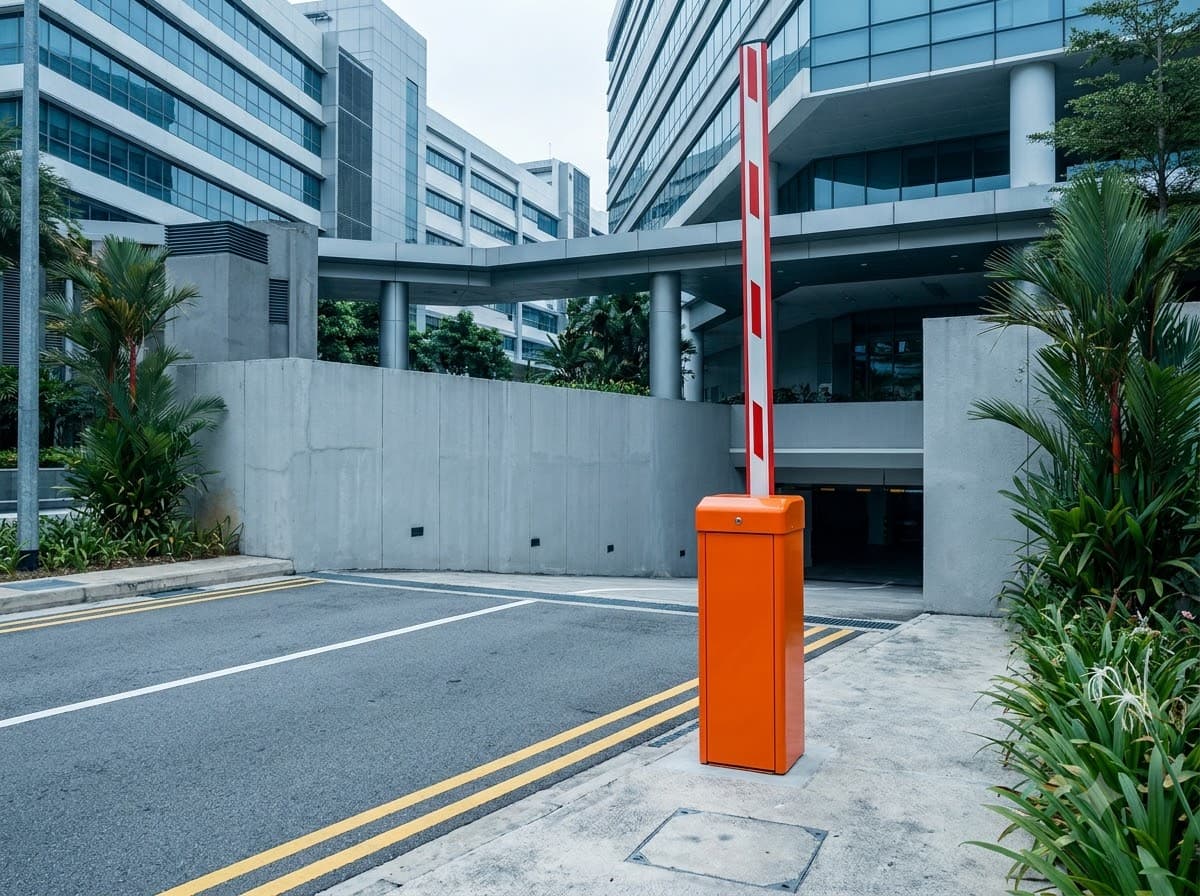
Boom barrier price in Kerala (2026): cost, access options & sizing
What a boom barrier costs to install in Kerala, how to size the arm for your entry, which access method suits your traffic, and why duty cycle matters more than price on a busy gate.
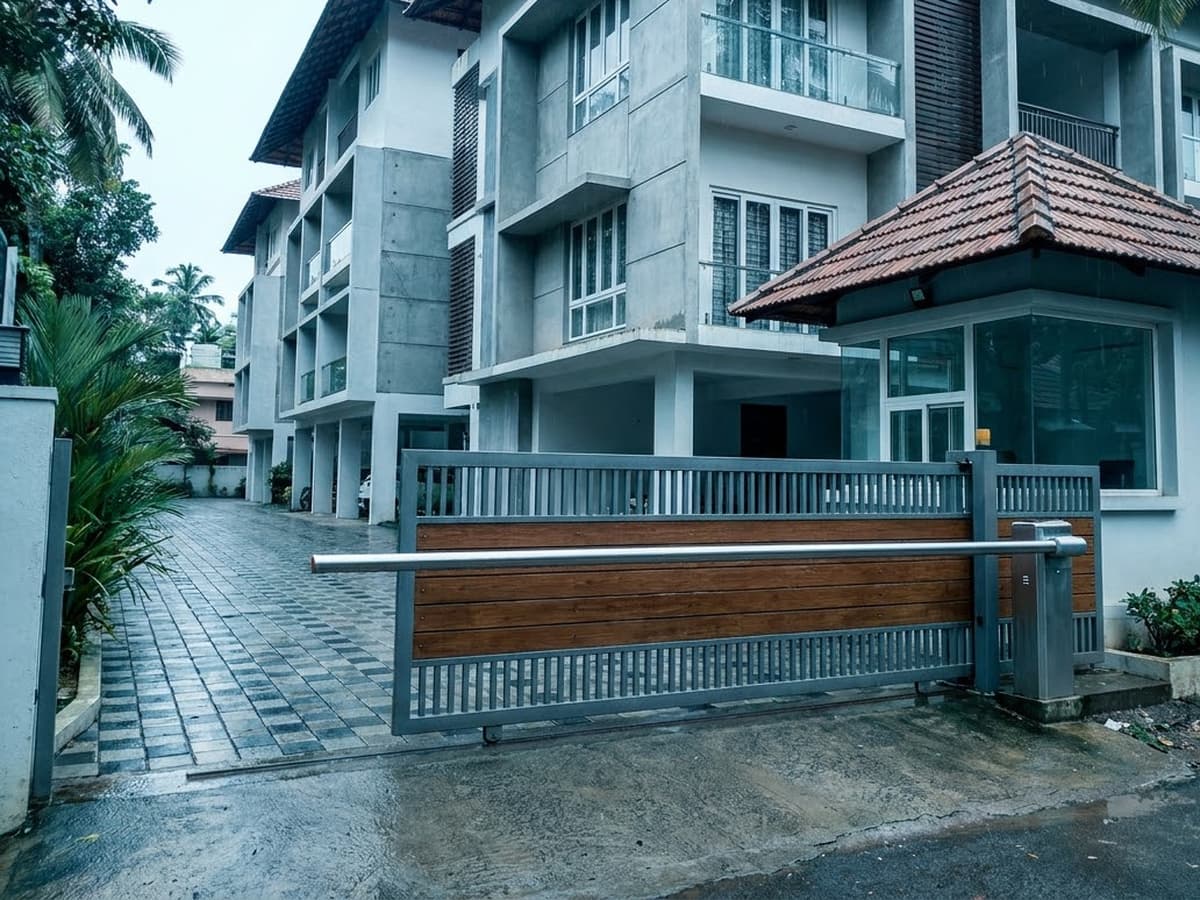
Apartment gate automation: what shared entrances need
A gate serving thirty flats is a different machine from a gate serving one house. Duty cycle, revocable access, visitor handling and who pays for maintenance — what to specify for a shared entrance in Kerala.
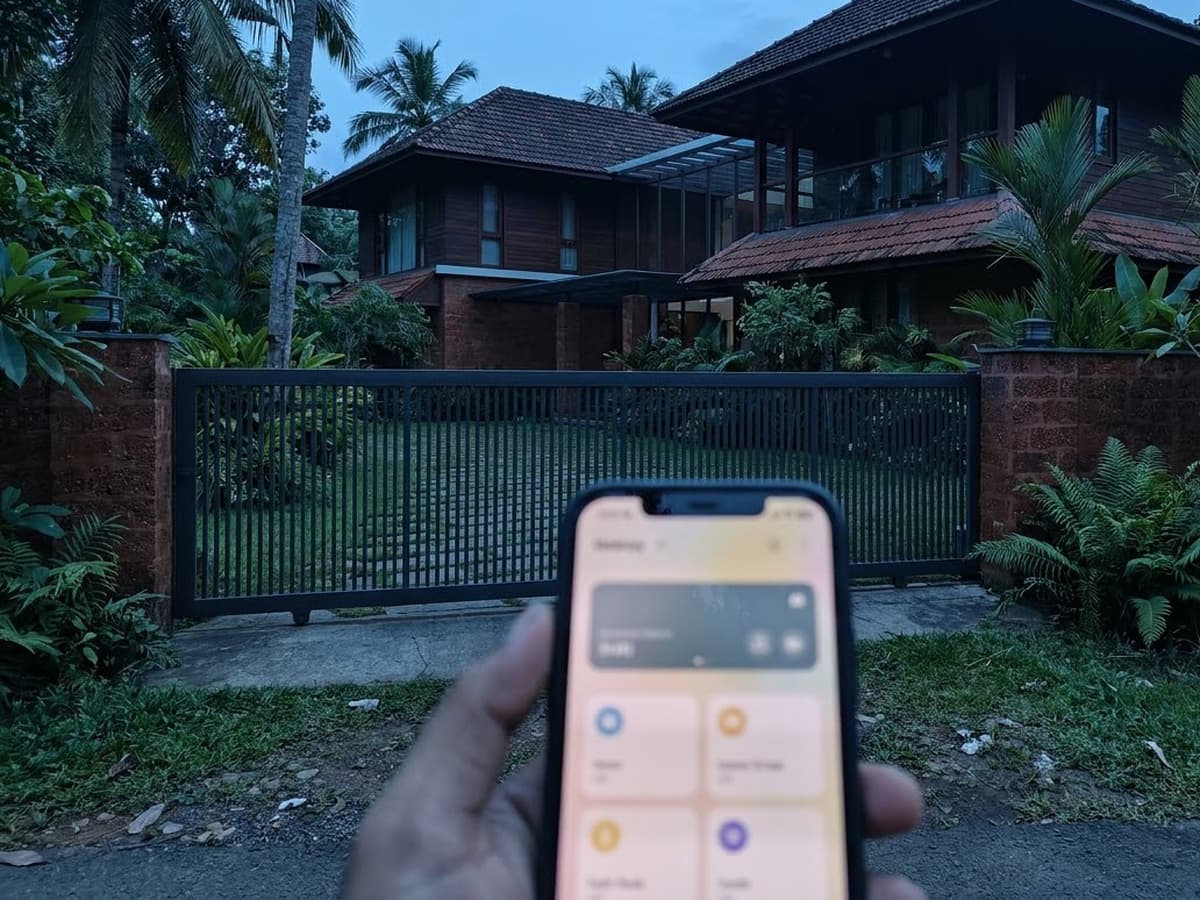
Automatic gates for NRI homes: control your gate from abroad
A house in Kerala that stands empty for months has a different problem from one that's lived in. How app control, battery backup and a local maintenance contract let you open your gate — and trust it — from another country.